How Inflation Shapes Investment Returns in Latin America
Inflation plays a central role in shaping investment returns in Latin America. The region has a long and varied history with price instability, ranging from moderate cyclical inflation to episodes of hyperinflation. For investors, both domestic and international, understanding how inflation affects real returns, asset allocation, currency valuation, and risk premiums is essential. While inflation influences investment outcomes in all economies, its effects in Latin America are often more visible due to structural factors, monetary policy credibility, fiscal constraints, and exchange rate volatility.
In simple terms, inflation reduces the purchasing power of money. For investors, this means that nominal returns must be adjusted to calculate real returns. In countries where inflation is low and stable, this adjustment is relatively predictable. In Latin America, however, inflation rates can shift quickly due to fiscal imbalances, commodity price swings, political uncertainty, or currency depreciation. These variations significantly affect bonds, equities, real assets, and foreign investments. The interaction between inflation and other macroeconomic variables often determines whether capital markets expand and deepen or contract under pressure.
Inflation also influences behavior at both the household and institutional levels. Savings decisions, credit demand, portfolio duration choices, and foreign exchange positioning all respond to perceptions of price stability. In environments where inflation expectations are unstable, economic agents shorten planning horizons. This shift alters investment timeframes and raises the premium demanded for long-term capital commitments. As a result, inflation does not simply alter returns mechanically; it reshapes financial structures and risk assessment across the economy.
Historical Context of Inflation in Latin America
Latin America’s experience with inflation has been shaped by recurring macroeconomic imbalances. During the 1980s and early 1990s, several countries—including Argentina, Brazil, and Peru—experienced hyperinflation. Annual price increases reached levels that disrupted contracts, eroded savings, and impaired domestic financial intermediation. Stabilization programs, often supported by international institutions, introduced fiscal adjustments, monetary reforms, and new currency regimes. In some cases, countries adopted currency boards or temporarily fixed exchange rates to restore confidence.
Stabilization efforts in the late 1990s and early 2000s introduced formal inflation-targeting frameworks in several economies. Central banks in Brazil, Chile, Colombia, Mexico, and Peru began publicly announcing inflation targets and publishing policy reports. These steps strengthened transparency and anchored expectations. As a result, inflation declined from double-digit or triple-digit levels to single digits in many countries.
Despite these improvements, inflationary pressures did not disappear permanently. Commodity exporters remained exposed to global demand fluctuations. Fiscal expenditure sometimes expanded during periods of favorable terms of trade, only to become difficult to reverse when commodity prices fell. Exchange rate adjustments transmitted external shocks into domestic prices. Consequently, investors in the region have learned to expect periodic inflation volatility, even if hyperinflation has become less common.
Structural Drivers of Inflation
Several structural characteristics contribute to inflation dynamics in Latin America. Many economies depend heavily on exports of primary commodities such as oil, copper, soybeans, iron ore, and agricultural products. Commodity price cycles influence fiscal revenue, trade balances, and exchange rate stability. When global demand weakens, currency depreciation raises the local cost of imported goods, contributing to higher consumer prices.
Fiscal policy also plays a decisive role. Public sector deficits financed through debt issuance may raise borrowing costs, while deficits financed through monetary expansion can directly increase money supply growth. Countries with limited tax bases or high social spending obligations often face tension between fiscal sustainability and political commitments. Investors closely monitor fiscal rules, debt-to-GDP ratios, and primary balances to assess inflation risk.
Another structural factor is financial dollarization. In some economies, residents hold a significant portion of bank deposits or contracts in U.S. dollars. While dollarization can provide a hedge against domestic inflation, it also constrains monetary policy flexibility. Sharp currency movements in partially dollarized systems can produce balance sheet effects that intensify inflationary pressures. The structure of domestic banking systems therefore interacts with inflation expectations and exchange rate stability.
Nominal vs. Real Returns
The core distinction for investors in Latin America is between nominal and real returns. A bond yielding 12% annually may appear attractive, but if inflation reaches 10%, the real gain is only 2%. In high-inflation environments, nominal profitability can conceal limited growth in purchasing power. This distinction shapes portfolio construction, especially for pension funds and insurance companies with long-dated liabilities.
Real returns depend not only on current inflation but also on expected inflation. Financial markets incorporate expectations into pricing through the yield curve. When inflation expectations rise, nominal interest rates adjust upward. However, if actual inflation exceeds expectations, real returns decline. Unexpected disinflation, by contrast, can benefit holders of fixed-rate assets.
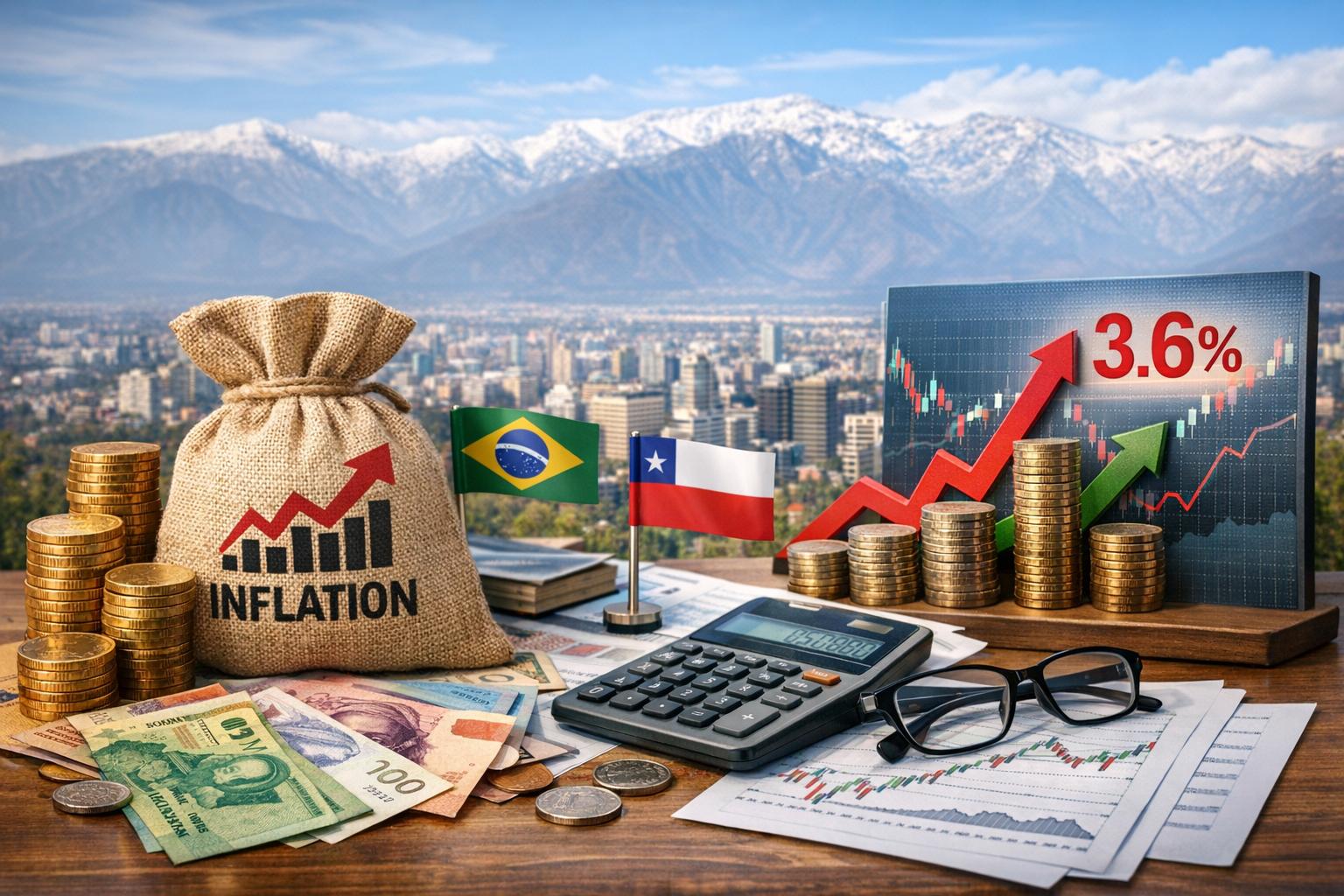
Inflation-linked bonds have expanded in relevance. Brazil’s Tesouro IPCA+ bonds and Chile’s Unidad de Fomento–linked instruments adjust principal according to official inflation measures. These securities allow investors to separate real interest rate risk from inflation risk. Their presence contributes to the development of domestic yield curves in real terms, supporting longer-term financing structures.
Inflation and Currency Depreciation
Inflation in Latin America is closely connected with exchange rate movements. Sustained inflation differentials between countries often lead to currency depreciation under flexible exchange rate regimes. While depreciation can improve export competitiveness, it also increases the cost of imported intermediate goods, fuel, and consumer products.
For foreign investors, currency risk is a primary consideration. A domestic equity portfolio may generate positive local returns, yet depreciation can reduce or eliminate gains when measured in hard currency terms. Over longer periods, inflation and exchange rate adjustments tend to align, meaning sustained high inflation often results in cumulative currency weakness.
Some investors use hedging strategies through forwards, futures, or options to manage currency exposure. However, hedging costs can be substantial when interest rate differentials are wide. Therefore, the decision to hedge depends on macroeconomic outlook, relative yields, and liquidity conditions in foreign exchange markets.
Impact on Fixed-Income Markets
Bond markets respond immediately to changes in inflation forecasts. Rising inflation expectations typically prompt central banks to tighten monetary policy by increasing benchmark interest rates. Higher policy rates push up yields across the maturity spectrum, reducing the price of existing bonds. Duration risk becomes more pronounced in volatile inflation environments.
Latin American sovereign bond markets have grown significantly over the past two decades, with expanded local currency issuance replacing reliance on foreign currency debt. This shift reduces currency mismatch risk for governments but transfers inflation risk to domestic investors. When inflation credibility is high, governments can issue longer maturities at moderate yields, enlarging domestic capital markets.
Corporate bond markets also depend on inflation stability. Elevated inflation raises nominal borrowing costs for firms and shortens average maturities. Companies with strong credit profiles may access inflation-indexed instruments to align liabilities with real revenues. Others may face constrained financing during periods of monetary tightening.
Equity Markets and Corporate Performance
Equities offer a partial buffer against inflation because firms can adjust prices over time. However, outcomes vary by sector. Companies with durable competitive advantages and strong pricing power are better positioned to protect profit margins. Essential services, regulated utilities with indexation clauses, and exporters benefiting from currency depreciation may maintain profitability even during inflationary periods.
By contrast, sectors sensitive to consumer purchasing power may experience demand compression when inflation reduces real wages. Retail, consumer discretionary, and domestically oriented services often face margin pressures in such environments. Additionally, high inflation increases discount rates used in equity valuation models. As discount rates rise, the present value of future earnings declines, affecting price-to-earnings multiples.
Market composition in Latin America influences aggregate equity performance. Many benchmark indices have significant exposure to commodities, financial institutions, and utilities. Commodity producers may benefit from global price increases, while banks’ profitability depends on interest rate spreads and credit quality. Inflation-induced rate hikes can widen margins temporarily but may weaken loan demand and increase credit risk.
Banking Systems and Credit Conditions
The banking sector serves as a transmission channel between inflation and investment returns. When central banks raise rates to contain inflation, borrowing costs for households and businesses increase. Higher rates moderate credit growth, affecting consumption and capital expenditure. Slower economic growth can weigh on corporate earnings and asset valuations.
Latin American banks typically maintain relatively high capitalization ratios compared to some advanced economies, partly due to regulatory reforms enacted after past crises. Nevertheless, credit cycles remain sensitive to monetary tightening. Non-performing loans may rise if inflation coincides with weaker economic activity. Investors evaluating bank equities or subordinated debt therefore consider inflation outlooks alongside macroeconomic growth projections.
Real Assets as Inflation Hedges
Real assets such as property, farmland, infrastructure, and commodities are frequently viewed as partial hedges against inflation. Real estate markets in major urban centers often adjust prices and rents over time, especially where rental contracts are indexed. Farmland values may correlate with agricultural commodity prices, offering indirect exposure to global inflationary trends.
Infrastructure concessions sometimes incorporate indexation mechanisms that link tariffs to consumer price indexes. This structure can support stable cash flows in real terms. Pension funds and institutional investors increasingly allocate capital to such assets to match long-term liabilities.
However, these hedging characteristics are not uniform. Regulatory intervention, rent controls, or contract renegotiation can limit revenue adjustments. Liquidity in private real asset markets is lower than in public securities markets, complicating portfolio rebalancing during volatility. Political and legal institutions therefore influence the effectiveness of real assets as inflation hedges.
The Role of Central Banks
The credibility and independence of central banks are central to investment outcomes. Clear communication, consistent policy frameworks, and data-driven adjustments help anchor expectations. Markets respond favorably when authorities act proactively to contain inflationary pressures, even at the cost of short-term growth moderation.
Inflation-targeting regimes rely on forward guidance and transparent reporting. Investors analyze meeting minutes, inflation reports, and voting patterns to evaluate commitment to price stability. Credible policy reduces risk premiums embedded in sovereign yields and supports currency stability.
When institutions weaken or fiscal authorities exert influence over monetary decisions, markets react by demanding higher compensation for risk. Historical examples demonstrate that persistent monetization of fiscal deficits leads to rapid erosion of confidence, shrinking domestic capital markets and increasing reliance on foreign currency assets.
Inflation Differentials Within the Region
Inflation patterns differ across Latin American economies. Chile and Peru have often maintained relatively stable price growth compared to Argentina, which has experienced repeated bouts of high inflation. Mexico’s inflation dynamics are influenced by integration with the United States through trade and supply chains. Brazil’s large domestic market and diversified economy create different policy trade-offs but still expose it to external shocks.
These divergences affect capital allocation. Countries with lower and more predictable inflation tend to attract longer-term investment and sustain deeper local bond markets. Pension funds and insurance companies prefer environments where long-dated instruments can be priced with greater certainty. Higher inflation volatility leads to shorter maturities and higher required yields.
External Shocks and Global Financial Conditions
Latin American inflation is highly sensitive to global developments. Commodity supercycles bring revenue windfalls but may also introduce domestic price pressures. Declines in global demand can weaken currencies and elevate imported inflation.
Changes in U.S. monetary policy influence capital flows. When U.S. interest rates rise, global investors often rebalance portfolios toward dollar-denominated assets. Such shifts can trigger currency depreciation across emerging markets, including Latin America. Domestic central banks may raise rates defensively, affecting investment returns across asset classes.
Global supply chain disruptions, energy price fluctuations, and geopolitical uncertainty further complicate inflation forecasting. The integration of Latin American economies into global trade networks ensures that external conditions remain a primary determinant of domestic inflation dynamics.
Portfolio Diversification and Risk Management
From a portfolio management perspective, exposure to Latin America requires active assessment of inflation trends. Combining local currency bonds, inflation-linked securities, export-oriented equities, and selective real assets can mitigate single-source risk. Hard currency sovereign or corporate debt reduces direct exposure to domestic inflation but introduces global interest rate risk.
Diversification across countries within the region can reduce vulnerability to country-specific shocks. Economic cycles are not perfectly synchronized. Inflation acceleration in one economy may coincide with stability in another. Institutional investors frequently adjust country weightings based on fiscal trajectories, political stability, and central bank credibility.
Risk management tools also include duration control, currency hedging strategies, and scenario analysis. Stress testing portfolios under alternative inflation paths helps investors evaluate potential real return outcomes.
Structural Reforms and Long-Term Outlook
Structural reforms aimed at fiscal responsibility and financial market development have improved the region’s resilience. Fiscal rules in several countries limit deficit expansion, while independent monetary authorities reinforce price stability mandates. Pension fund reforms have created stable domestic demand for long-term securities, supporting market deepening.
Nevertheless, vulnerabilities remain. Political transitions can alter fiscal priorities. Social demands for expanded public spending may test adherence to fiscal frameworks. Dependence on commodity revenues continues to expose public finances to external volatility. Sustained discipline is required to maintain low and stable inflation over time.
Real Returns and Wealth Preservation
Ultimately, inflation’s impact on investment returns in Latin America depends on the ability to achieve sustainable real growth of capital. Investors must distinguish between high nominal yields and genuine purchasing power gains. Evaluating inflation expectations, exchange rate risks, and institutional credibility is central to this assessment.
Domestic savers often adopt protective measures in high-inflation contexts, including holding foreign currency deposits, investing in property, or purchasing inflation-indexed instruments. International investors typically require substantial yield spreads before allocating capital to compensate for macroeconomic uncertainty.
Periods characterized by stable and predictable inflation tend to produce stronger capital formation, lower borrowing costs, and improved asset valuations. Conversely, unpredictable inflation increases volatility, raises discount rates, and shortens investment horizons. The interaction between macroeconomic management and market expectations therefore shapes long-term wealth preservation across the region.
Inflation remains a defining variable in Latin American financial markets. Its influence extends beyond price indexes to encompass currency values, capital flows, fiscal policy, and institutional credibility. For investors, rigorous analysis of these interconnections is essential for navigating opportunities and managing risks within the region’s diverse economies.
About the Author