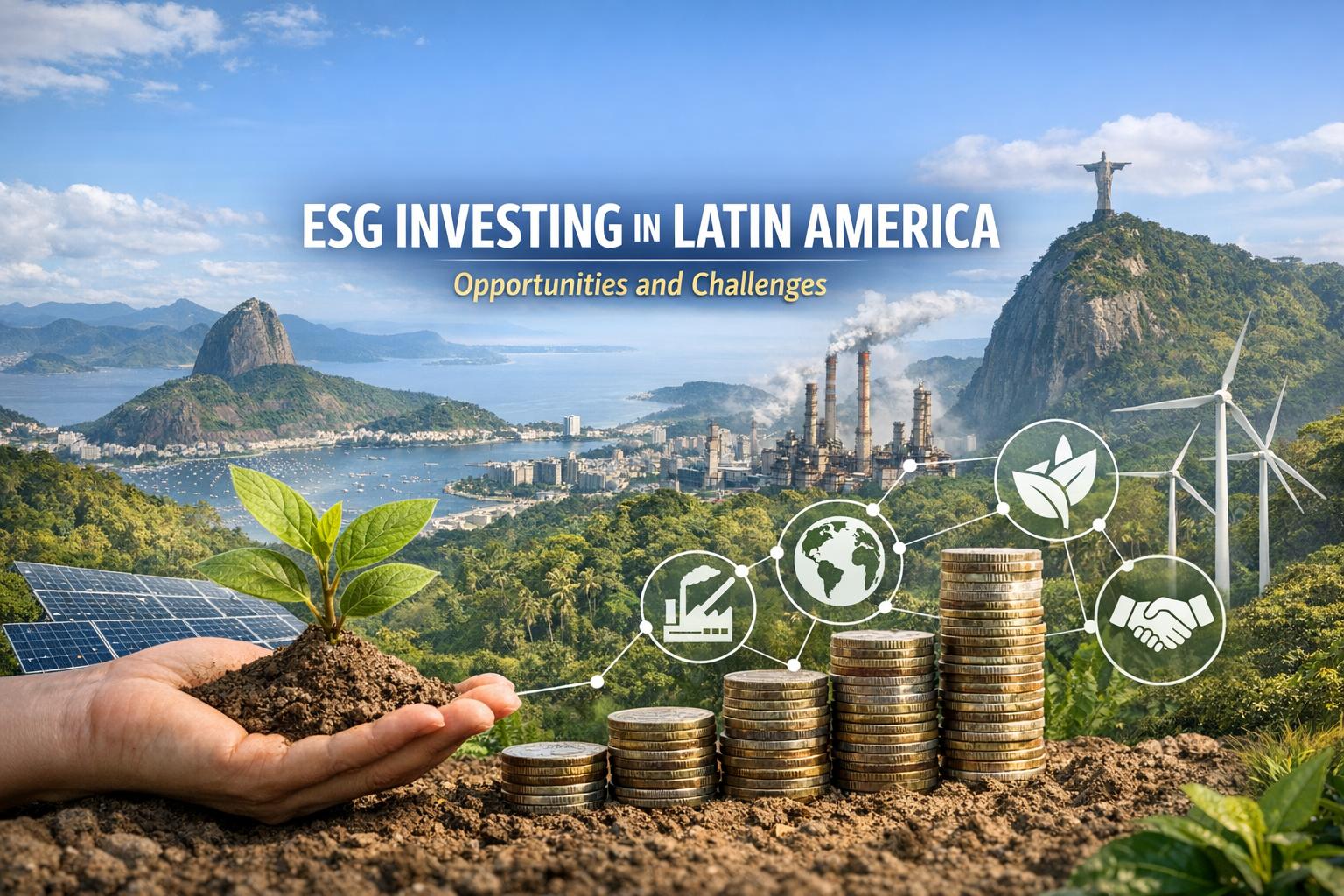
ESG Investing in Latin America: Opportunities and Challenges
Environmental, Social, and Governance (ESG) investing has become an established component of global capital allocation strategies. In Latin America, ESG considerations are increasingly incorporated into investment decisions by institutional investors, development finance institutions, sovereign funds, pension managers, and multinational corporations. What began primarily as a reputational or values-based framework has evolved into a financially material approach to risk identification, long-term resilience analysis, and capital preservation.
The region presents a distinctive mix of natural resource wealth, social inequality, political volatility, and regulatory evolution. These characteristics create both meaningful opportunity and structural risk for ESG-focused investors. While Latin America plays a pivotal role in the global energy transition through its mineral reserves and renewable capacity, it also faces governance weaknesses, climate vulnerability, and constrained fiscal space in several economies. The interaction of these variables requires investors to apply nuanced, country-specific strategies rather than broad regional assumptions.
Macroeconomic and Structural Context
Latin America consists of heterogeneous economies across South America, Central America, and the Caribbean. Brazil and Mexico represent the largest markets, with diversified industrial bases, functioning domestic capital markets, and substantial foreign direct investment. Chile, Colombia, and Peru combine commodity exports with open trade regimes. Argentina exhibits recurrent macroeconomic instability but retains significant agricultural and mineral capacity. Smaller Central American and Caribbean economies tend to be more dependent on tourism, remittances, or a narrow range of exports.
Economic structures in much of the region remain commodity-oriented. Exports of oil, gas, copper, lithium, iron ore, soybeans, and agricultural products generate foreign currency earnings and fiscal revenues. This concentration creates exposure to global commodity cycles. From an ESG standpoint, heavy reliance on extractive industries raises questions about carbon intensity, water usage, land rights, and long-term diversification. However, it also positions the region as an essential supplier of transition-critical resources.
Fiscal capacity varies widely. Chile and Peru have historically maintained stronger fiscal frameworks, whereas countries such as Argentina and Venezuela have experienced recurrent debt crises. Public finances influence the ability of governments to invest in climate adaptation, social programs, and regulatory enforcement. Sovereign creditworthiness is therefore indirectly linked to ESG performance, particularly where climate risk and social pressures affect budget stability.
Demographic trends are another structural factor. Many Latin American countries benefit from relatively young populations compared to advanced economies. This demographic profile supports long-term growth potential but places pressure on labor markets, education systems, and social services. ESG investors increasingly consider demographic sustainability as part of broader human capital analysis.
Environmental Factors: Natural Assets and Climate Exposure
Resource Endowment and Biodiversity
Latin America contains some of the world’s most significant ecological assets. The Amazon basin spans multiple countries and plays a key role in global carbon absorption. The Andean mountain system influences freshwater systems across the continent. Tropical forests in Central America and the Caribbean host high levels of biodiversity. These natural systems provide ecosystem services with measurable economic value.
In parallel, the region hosts vast reserves of minerals critical to the energy transition. Chile and Peru are leading copper producers; Argentina, Bolivia, and Chile form the “lithium triangle”; Brazil supplies iron ore and nickel; and Mexico contributes silver and other industrial metals. Demand for these minerals is expected to increase as electric vehicle production, battery storage, and grid electrification expand globally.
From an ESG perspective, natural resource endowment can enhance strategic positioning but also intensify environmental scrutiny. Deforestation in Brazil and parts of the Amazon has drawn international attention. Water-intensive lithium extraction in arid zones raises sustainability concerns. Investors must evaluate environmental management systems, permitting processes, and long-term restoration obligations.
Companies operating in forestry and agriculture face growing requirements for traceability and deforestation-free supply chains. International buyers increasingly demand documented compliance with environmental standards. This dynamic creates incentives for improved environmental governance but also increases compliance costs.
Energy Transition and Renewable Capacity
Latin America’s electricity generation mix includes a higher share of renewables than many other regions. Hydropower has historically dominated in Brazil, Colombia, and Paraguay, while Chile has rapidly expanded solar capacity due to favorable irradiation in the Atacama Desert. Wind power growth has been significant in northeastern Brazil, Uruguay, and parts of Mexico.
This existing renewable base provides a structural advantage in decarbonization trajectories. Grid decarbonization can support electrification of transport and industrial processes. At the same time, dependence on hydropower exposes systems to drought-related generation shortfalls. Climate variability has periodically reduced reservoir levels, requiring supplemental fossil fuel generation.
Investment opportunities span generation, transmission infrastructure, energy storage, and distributed renewable systems. Long-term power purchase agreements with creditworthy off-takers underpin many projects. For international investors, currency hedging, regulatory clarity, and contract enforceability remain central concerns when assessing risk-adjusted returns.
Climate Vulnerability and Adaptation Needs
The region is highly exposed to physical climate risks. Caribbean economies face hurricanes and rising sea levels. Central America is susceptible to tropical storms and landslides. Southern agricultural regions experience drought episodes, while Andean glacier retreat affects freshwater supply.
Physical risk influences agricultural yields, infrastructure resilience, and insurance markets. It also has implications for sovereign risk assessments, as post-disaster reconstruction can strain public budgets. Investors increasingly incorporate climate scenario analysis into portfolio construction, evaluating how temperature pathways and extreme weather events could affect asset valuations.
Climate adaptation investment is emerging as a distinct asset class. Resilient infrastructure, flood control systems, water recycling, and drought-resistant agriculture represent long-term capital needs. Development banks often co-finance such projects, improving credit profiles and enabling private sector participation.
Social Dimensions: Inequality, Labor, and Demographics
Income Inequality and Social Cohesion
Latin America has long exhibited elevated levels of income and wealth inequality. Although poverty levels declined in certain periods of economic expansion, structural disparities in education, housing, and healthcare persist. These disparities influence political dynamics and regulatory responses.
Periods of social protest in countries such as Chile, Colombia, and Ecuador have highlighted public concerns regarding pension systems, energy prices, and taxation. For investors, social unrest can disrupt operations, delay infrastructure development, and prompt regulatory revisions. ESG integration therefore includes analysis of corporate stakeholder engagement, community relations, and social investment programs.
Companies in extractive industries face heightened scrutiny over benefit-sharing mechanisms. Transparent royalty payments, local procurement policies, and infrastructure investment commitments are increasingly viewed as components of maintaining a durable social license to operate.
Labor Markets and Informality
Informal employment remains significant across the region. In many countries, a substantial share of workers lack formal contracts, social security contributions, or legal protections. Informality reduces tax revenues and contributes to pension system fragmentation.
For publicly listed companies and multinational operators, compliance with labor standards is generally stronger, particularly in export-oriented sectors exposed to international oversight. However, supply chain monitoring remains an ongoing requirement. ESG-focused investors evaluate worker safety records, collective bargaining practices, diversity policies, and training programs as part of human capital assessment.
Automation and technological adoption may alter labor demand in manufacturing and agriculture. Workforce reskilling and digital education initiatives are becoming relevant social investment themes. Firms that integrate workforce transition strategies may demonstrate greater long-term resilience.
Financial Inclusion and Digital Expansion
Financial inclusion has progressed through rapid digitalization. Brazil’s instant payment system, along with expanding fintech ecosystems in Mexico and Colombia, has broadened access to banking, credit, and investment products. Increased inclusion can stimulate entrepreneurship and consumption while reducing reliance on informal financial services.
From an ESG standpoint, financial inclusion aligns with social development objectives. However, growth in unsecured consumer lending and digital credit platforms raises underwriting and consumer protection considerations. Effective regulation and prudent risk management are essential to ensure that financial inclusion supports sustainable growth rather than credit imbalances.
Governance Considerations
Regulatory Frameworks and Corporate Disclosure
Governance environments vary significantly across jurisdictions. Brazil has a relatively advanced securities regulatory structure and has promoted corporate governance codes through its stock exchange. Chile has introduced mandatory climate-related disclosure requirements for certain listed firms. Mexico has enhanced sustainable finance guidelines within its financial system.
Despite these advances, regulatory continuity can be affected by electoral cycles. Policy shifts relating to energy pricing, mining concessions, or environmental enforcement have occurred following changes in administration. Investors typically conduct jurisdiction-specific legal assessments and scenario modeling to account for potential policy adjustments.
The adoption of international sustainability reporting standards, including guidance aligned with TCFD and evolving ISSB frameworks, is expanding. However, data comparability is not fully consistent, particularly among mid-sized enterprises. Third-party verification and independent ESG research providers continue to play an important role in supplementing corporate disclosures.
Corruption Risk and Institutional Strength
Anti-corruption enforcement has advanced in several countries, with high-profile investigations affecting political and corporate leaders. Stronger enforcement can improve transparency over time, yet it also underscores legacy governance challenges.
For investors, corruption risk influences procurement practices, concession awards, and partnership structures. Comprehensive compliance frameworks, transparent audit mechanisms, and reputational risk management are integral to ESG due diligence. Institutional strength—measured through judicial independence, regulatory capacity, and contract enforceability—remains a differentiating factor among markets.
Development of Sustainable Capital Markets
Green, Social, and Sustainability-Linked Instruments
Latin America has experienced steady growth in labeled bond issuance. Sovereign green bonds from Chile and Mexico have attracted international demand. Brazil and Colombia have explored sustainability-linked frameworks, tying coupon structures to environmental or social performance indicators.
Corporate issuers in energy, banking, and infrastructure have entered the market with green and sustainability-linked bonds. These instruments typically define measurable performance targets such as emissions intensity reduction or renewable capacity expansion. Investors evaluate the rigor of target calibration, baseline transparency, and external verification processes before allocating capital.
Sustainability-linked bonds are particularly relevant in carbon-intensive sectors transitioning toward lower emissions profiles. Properly structured instruments can align financing costs with performance incentives, though they require robust monitoring mechanisms.
Role of Multilateral and Development Finance Institutions
Development finance institutions (DFIs) and multilateral banks maintain a substantial presence in the region. They provide long-term financing, political risk insurance, and technical expertise for infrastructure and climate projects. Their participation can reduce project-level risk and improve governance standards.
Blended finance structures are frequently used to mobilize private capital in areas such as renewable energy, water systems, and urban transport. Concessional tranches may absorb initial risk, encouraging institutional investors to participate. While blended finance broadens access to capital, it also introduces additional reporting and compliance obligations.
Sector-Specific Opportunities
Renewable Energy, Storage, and Grid Modernization
Renewables continue to attract domestic and foreign investment. Competitive procurement auctions in Brazil and Chile have facilitated price declines and capacity growth. Grid modernization and interconnection projects are necessary to integrate intermittent energy sources effectively.
Energy storage systems, including battery installations, present complementary opportunities. As renewable penetration increases, grid stability and demand management become critical operational considerations. Long-duration infrastructure capital is well aligned with these projects.
Critical Minerals and Responsible Extraction
Demand for lithium and copper is expected to remain strong in electrification scenarios. Governments in the region are evaluating royalty frameworks, state participation models, and environmental safeguards. Regulatory clarity influences foreign direct investment decisions.
Water management, community consultation, and tailings dam safety represent key ESG risk factors in mining operations. Investors increasingly require evidence of adherence to international best practices and independent environmental impact assessments.
Sustainable Agriculture and Land Use
Agriculture accounts for a significant share of exports in Brazil, Argentina, Paraguay, and several Central American countries. Sustainable intensification strategies, including precision fertilization and regenerative soil management, aim to improve yields while limiting environmental degradation.
Global supply chain pressure has accelerated adoption of deforestation monitoring technologies and traceability systems. Producers that align with international sustainability standards may gain improved market access and financing terms.
Key Risks Facing ESG Investors
Political Cycles and Regulatory Variability
Elections can produce shifts in fiscal policy, resource taxation, and environmental enforcement priorities. Infrastructure concessions and public-private partnerships may be renegotiated under new administrations. Scenario analysis and diversification across jurisdictions help mitigate concentrated exposure.
Currency and Macroeconomic Volatility
Exchange rate fluctuations remain pronounced in several economies. Projects generating local currency revenues but financed in foreign currency can experience valuation stress during depreciation episodes. Hedging mechanisms and local capital market development partially offset this risk but affect overall returns.
Data Gaps and Greenwashing Risk
While ESG disclosure is advancing, information gaps persist, particularly among smaller issuers. The risk of overstated sustainability credentials requires independent verification. Investors often combine quantitative screening with active engagement to validate reported performance metrics.
Integration Strategies for Investors
Institutional investors applying ESG strategies in Latin America typically integrate multiple analytical layers. Country-level sovereign ESG assessments inform allocation decisions, while sector screening identifies material risk factors. Active ownership, including dialogue with issuers and participation in shareholder votes, strengthens governance oversight.
Long-term investment horizons are generally better suited to the region’s development profile. Infrastructure, renewable energy, and agricultural transformation require patient capital aligned with gradual regulatory improvement and institutional strengthening.
Future Outlook
The trajectory of ESG investing in Latin America will be influenced by global decarbonization pathways, commodity demand linked to electrification, and domestic institutional reform. The region’s environmental assets and mineral reserves create structural relevance in global supply chains. Simultaneously, improvements in transparency, judicial capacity, and policy stability will determine investor confidence.
Digitalization of financial systems and expanded sustainability reporting are likely to enhance comparability across markets. Collaboration between governments, private investors, and multilateral institutions remains essential to scaling capital deployment in climate mitigation and adaptation projects.
Conclusion
ESG investing in Latin America involves a combination of opportunity and complexity. Environmental strengths in renewable energy and critical minerals align with global sustainability trends, while social inequality and governance variability introduce material risk factors. Effective investment strategies depend on localized insight, regulatory awareness, and comprehensive due diligence.
Investors who integrate environmental analysis with careful assessment of social and governance dimensions may identify diversified opportunities across infrastructure, financial services, mining, and agriculture. Continued progress in disclosure standards, institutional reform, and capital market development will shape the evolving landscape of sustainable investment across the region.
About the Author