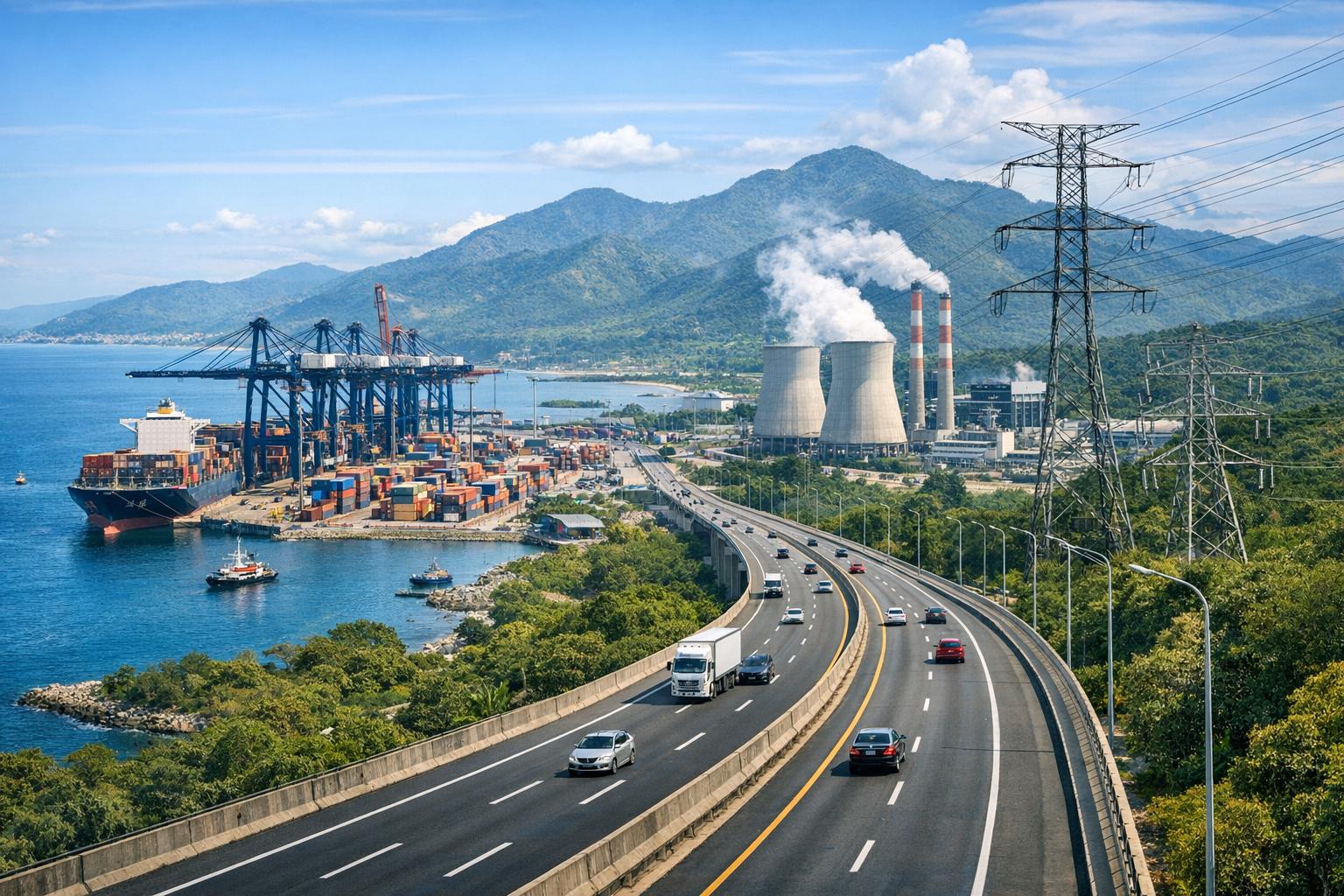
Infrastructure Investing in Latin America: Roads, Ports, and Power
Overview of Infrastructure Investment in Latin America
Infrastructure investment in Latin America has long been central to the region’s economic development strategy. Roads, ports, and power systems form the backbone of trade, industrial activity, and social inclusion. Over the past two decades, governments and private investors have increased capital allocation toward large-scale projects aimed at addressing historic deficits while supporting urbanization, export growth, and energy transition goals.
The region faces a measurable infrastructure gap. Estimates from multilateral development institutions indicate that Latin America needs to invest between 3% and 5% of its annual GDP in infrastructure to close existing deficits and maintain competitive growth. In many countries, actual investment has historically remained below these levels, often constrained by fiscal limitations, institutional capacity, and macroeconomic volatility. As a result, infrastructure investing in roads, ports, and power continues to represent both a structural necessity and a long-term opportunity for domestic and international capital providers.
Infrastructure development in the region is closely linked to productivity performance. Logistics inefficiencies increase transport times and raise export costs. Electricity shortages or grid instability can constrain industrial output. Limited connectivity in rural areas affects access to education, healthcare, and markets. Addressing these constraints requires coordinated investment frameworks that combine financial capital with regulatory alignment and technical expertise.
Macroeconomic Context and Investment Frameworks
Latin America comprises diverse economies with different income levels, industrial bases, and fiscal capacities. Brazil and Mexico account for a large share of the region’s GDP, while mid-sized economies such as Chile, Colombia, and Peru have pursued open trade models supported by institutional reforms. Smaller Central American and Caribbean states operate within narrower fiscal envelopes and face higher exposure to climate-related risks.
Infrastructure demand reflects these differences. Commodity exporters require efficient corridors linking interior production zones to maritime gateways. Manufacturing-focused economies emphasize road, rail, and port systems integrated with global supply chains. Urbanized populations increase pressure on electricity networks and metropolitan transport systems.
Governments finance infrastructure through combinations of public expenditure, concessional funding, and private participation. Since the 1990s, public-private partnerships (PPPs) have played an increasingly important role. Under PPP frameworks, private entities typically assume responsibility for design, construction, financing, and operation over defined concession periods. Revenue structures may depend on user fees, government availability payments, or hybrid models.
The strength of PPP programs varies across countries. Chile is widely regarded as an early adopter with a structured and predictable concession program that became a reference model for the region. Colombia and Peru refined their concession laws to improve risk allocation and standardize contracts. Brazil’s federal and state-level concession programs have mobilized significant capital, although administrative complexity and political transitions can affect project pipelines.
Multilateral development banks, including the Inter-American Development Bank and the World Bank, contribute financing, risk mitigation instruments, and technical support. Their participation often enhances project credibility by strengthening due diligence, environmental safeguards, and procurement transparency. Development finance institutions can also provide local currency loans, reducing exchange rate exposure for projects generating domestic revenues.
Domestic capital markets are evolving as additional funding sources. Pension reforms in countries such as Chile, Mexico, Colombia, and Peru created institutional investors with long-term liabilities suited to infrastructure assets. These investors allocate capital through infrastructure funds, project bonds, and direct equity stakes, deepening the region’s financial ecosystem.
Road Infrastructure: Expanding Connectivity and Efficiency
Road transport accounts for the majority of freight and passenger movement in Latin America. In several countries, more than 70% of goods are transported by truck. This reliance reflects geography as well as limited rail coverage. However, road quality remains uneven. While some corridors meet international standards, secondary and rural roads frequently require rehabilitation or expansion.
Investment strategies often focus on high-traffic corridors linking production centers to urban markets or ports. In Brazil, grain and soybean production in Mato Grosso depends on the reliability of highways connecting interior regions to export terminals. Improving pavement quality and expanding capacity reduce transit times and fuel consumption, supporting export competitiveness.
Colombia’s Fourth Generation (4G) program represented one of the most comprehensive road modernization efforts in the region. Structured under standardized concession contracts, the program aimed to upgrade thousands of kilometers of highways through private financing. Although implementation encountered legal investigations affecting some contractors and delays in financial closure, the overall initiative contributed to improved connectivity between Bogotá, Medellín, and key ports.
Mexico’s toll road concessions illustrate another established model. Many highways operate under long-term agreements with revenue derived from traffic flows. For institutional investors, these projects provide exposure to assets with measurable demand patterns. Traffic elasticity, however, must be carefully modeled, as economic downturns, fuel price changes, or pandemic-related restrictions can significantly affect volumes.
In Peru, road concessions have linked mining regions in the Andes to coastal ports, reducing export bottlenecks. In Chile, mature concession highways connect Santiago to regional cities, with integrated electronic toll systems that improve collection efficiency. Uruguay has recently expanded PPP use to finance road rehabilitation programs, demonstrating that smaller economies can adapt structured models at appropriate scale.
Persistent challenges include land acquisition disputes, environmental permitting processes, and social consultation requirements. Projects traversing indigenous territories or ecologically sensitive areas require extensive stakeholder engagement. Cost overruns and construction delays can alter projected returns, underscoring the importance of rigorous feasibility assessment and contingency planning.
Urban Road Networks and Metropolitan Mobility
Urbanization intensifies the demand for metropolitan transport infrastructure. Megacities such as São Paulo, Mexico City, Buenos Aires, and Lima face congestion costs that affect productivity and public health. While metro systems and bus rapid transit projects are significant components of urban mobility strategies, road infrastructure—including ring roads and dedicated bus corridors—remains essential.
PPP structures have also been applied in urban contexts, although demand risk is more sensitive to public policy changes and fare regulation. Integrating road planning with land use zoning, housing development, and environmental policy is increasingly important to ensure that infrastructure investment translates into broader urban efficiency gains.
Port Infrastructure: Enabling Trade and Logistics Integration
Latin America’s integration into global trade networks depends heavily on maritime transport. The region exports agricultural commodities, minerals, hydrocarbons, and manufactured goods to markets in Asia, North America, and Europe. Efficient port operations reduce dwell times, improve cargo handling productivity, and support supply chain reliability.
The transition from state-operated ports to landlord port models shaped the modernization trajectory of many countries. Under this system, governments retain ownership of land and basic maritime infrastructure, while private concessionaires operate terminals and invest in cranes, storage facilities, and digital systems. This approach encourages capital investment while maintaining public oversight of strategic assets.
Chile’s port concessions in Valparaíso and San Antonio led to productivity improvements and expansion of container capacity. Peru’s modernization of Callao incorporated private investment in new terminals and logistics platforms. Colombia restructured several Caribbean ports, strengthening its role as both an export gateway and a transshipment hub.
Brazil’s port system is broader in scale and complexity. Santos handles diversified cargo flows, including sugar, coffee, containerized goods, and industrial inputs. Northern ports such as Itaqui and Barcarena have grown in importance due to shifts in agricultural production patterns. Continuous dredging, quay extension, and rail integration projects aim to accommodate larger vessels and reduce inland bottlenecks.
Panama’s role extends beyond its ports to the Panama Canal, a critical link between the Atlantic and Pacific oceans. The canal’s expansion enhanced capacity for larger vessels, influencing global shipping routes. Associated logistics zones and free trade areas strengthen Panama’s position as a hub for regional distribution.
Technological Modernization and Environmental Compliance
Port competitiveness increasingly depends on digitalization. Terminal operating systems, automated stacking cranes, and real-time tracking platforms optimize asset utilization. Cold-chain infrastructure for perishable exports, especially fruit and seafood, adds value to agricultural supply chains.
Environmental regulation is tightening. Ports must manage ballast water compliance, air emissions from vessels at berth, and waste disposal standards. Shore power systems, which allow ships to connect to electrical grids while docked, are under consideration in several locations. These initiatives align port infrastructure investment with broader decarbonization commitments.
Power Sector Investment: Reliability, Diversification, and Transition
Electricity infrastructure underpins economic modernization. Latin America’s power sector reforms since the 1990s introduced competition in generation, independent system operators, and regulatory agencies supervising tariffs and grid access. Although institutional frameworks differ across countries, many have established wholesale electricity markets or auction systems.
Hydropower remains a foundational resource, particularly in Brazil, Colombia, and Ecuador. Large hydroelectric dams provide baseload generation but depend on rainfall patterns. Extended drought periods have exposed vulnerabilities in systems heavily reliant on hydrology, prompting diversification strategies.
Renewable energy investment has accelerated across the region. Chile conducted technology-neutral auctions that produced competitively priced solar and wind contracts. Brazil’s wind sector expanded rapidly in northeastern states, benefiting from consistent wind resources and auction-based power purchase agreements. Mexico’s reform period prior to recent policy shifts attracted large renewable commitments, though regulatory uncertainty later slowed additional auctions.
Natural gas-fired generation complements intermittent renewables by providing flexible capacity. Argentina’s shale resources in Vaca Muerta hold potential for expanded gas supply, although infrastructure and financing constraints affect development timelines. Regional gas pipelines, including those linking Bolivia to Brazil and Argentina, illustrate cross-border energy interdependence.
Transmission investment is critical to integrate renewable resources often located far from consumption centers. Brazil’s model of auctioning transmission concessions with remuneration based on availability payments has drawn participation from domestic and international infrastructure funds. Long-term contracts with indexed revenues provide predictable income streams, contingent on regulatory stability.
Distributed Energy and Rural Electrification
Beyond utility-scale projects, distributed generation is gaining momentum. Rooftop solar installations in Brazil and Chile have increased due to net metering policies and declining equipment costs. In rural areas of Central America and the Andean region, decentralized solar or hybrid systems expand access to electricity where grid extension is economically challenging.
Development finance institutions frequently support these initiatives, combining social impact objectives with financial sustainability. Electrification improves productivity in agriculture, supports small enterprises, and enhances service delivery in health and education.
Financing Structures and Capital Market Development
Infrastructure projects typically employ limited-recourse project finance structures. Equity sponsors absorb construction and operational risks, while lenders assess projected cash flows under concession agreements or power purchase contracts. Debt tenors often extend beyond 10 or 15 years, aligning with asset lifecycles.
Local currency financing is preferable for assets generating domestic revenue, but currency mismatches persist in several markets. Depreciation of local currencies against the U.S. dollar can affect debt service capacity when liabilities are denominated externally. Some governments and multilateral institutions provide hedging facilities or encourage domestic bond issuance to mitigate this risk.
Chile’s inflation-indexed bond market provides an example of alignment between infrastructure revenue and investor demand. Mexican pension funds allocate capital through structured certificates listed on domestic exchanges. Brazil’s infrastructure debentures offer tax incentives to investors, supporting capital formation for eligible projects.
Risk allocation mechanisms determine overall bankability. Concession agreements may specify provisions related to force majeure, tariff adjustment formulas, early termination compensation, and dispute resolution procedures. Transparent renegotiation frameworks reduce uncertainty and promote sustained investor engagement.
Sustainability, Governance, and Regulatory Stability
Environmental and social governance considerations are integral to contemporary infrastructure investment. Environmental impact assessments, community consultation processes, and indigenous rights frameworks are embedded in project preparation. Noncompliance can lead to delays or litigation, affecting financial performance.
Climate adaptation measures are increasingly incorporated into design standards. Coastal ports assess sea-level rise exposure. Road networks in mountainous regions consider landslide risk. Power systems evaluate resilience to extreme weather events.
Governance quality strongly influences capital costs. Investors examine historical precedent regarding contract enforcement and tariff adjustments. Countries with consistent regulatory practice, independent oversight agencies, and transparent procurement processes generally achieve lower financing spreads. Conversely, frequent policy reversals or interventionist measures elevate perceived risk.
Green bonds and sustainability-linked instruments expand funding channels. Sovereign issuances in Chile and Colombia, alongside corporate green bonds in Brazil and Mexico, demonstrate integration of environmental objectives with capital market access. Reporting standards and third-party verification enhance credibility.
Regional Integration and Cross-Border Projects
Regional cooperation initiatives aim to overcome fragmentation and enhance connectivity. The Central American Electrical Interconnection System enables cross-border power trade, stabilizing supply and lowering marginal costs. In South America, proposals for bi-oceanic corridors seek to link Atlantic production centers with Pacific export routes, though implementation remains complex due to geography and financing scale.
Trade agreements and customs harmonization measures complement physical infrastructure. Efficient border crossings and integrated customs platforms reduce transit delays. Coordinated planning can minimize duplication of investment and encourage economies of scale.
Outlook for Infrastructure Investors
Several structural factors shape the medium-term outlook. Urban population growth sustains demand for mobility and electricity. Commodity cycles influence port throughput and related transport corridors. Nearshoring trends, particularly in Mexico, elevate the importance of reliable highways, rail links, and border infrastructure to serve North American markets.
Energy transition commitments require continued expansion of renewable capacity and modernization of grids. Battery storage and grid management technologies may alter investment profiles, introducing new asset classes alongside traditional generation and transmission.
Fiscal constraints in many countries reinforce reliance on private participation. To maintain investor confidence, governments must preserve transparent procurement systems, uphold contractual commitments, and ensure independent regulation. For investors, thorough country risk assessment and diversified portfolio allocation remain central considerations.
Infrastructure assets in Latin America can provide long-duration, inflation-linked cash flows that align with institutional investment horizons. However, capital allocation decisions must incorporate currency exposure, construction risk, and potential regulatory change. Differentiation among countries is substantial, and returns vary accordingly.
Conclusion
Infrastructure investment in Latin America’s roads, ports, and power systems reflects a convergence of development priorities and capital market evolution. Roads enhance domestic integration and support export logistics. Ports connect regional production to global markets. Power infrastructure enables industrial expansion and underpins energy transition objectives.
The region’s experience indicates that stable regulatory environments, effective risk-sharing frameworks, and credible institutions are decisive in mobilizing long-term capital. Although macroeconomic volatility and political shifts remain recurring features, infrastructure will continue to occupy a central role in economic policy agendas.
For policymakers, the emphasis lies in strengthening project preparation, ensuring transparent governance, and aligning infrastructure strategies with sustainability goals. For investors, Latin America offers a spectrum of opportunities shaped by sectoral dynamics, national institutions, and global economic conditions. The interplay between these factors will determine the pace and composition of infrastructure development in the years ahead.
About the Author