The Role of Commodities in Latin American Investment Strategies
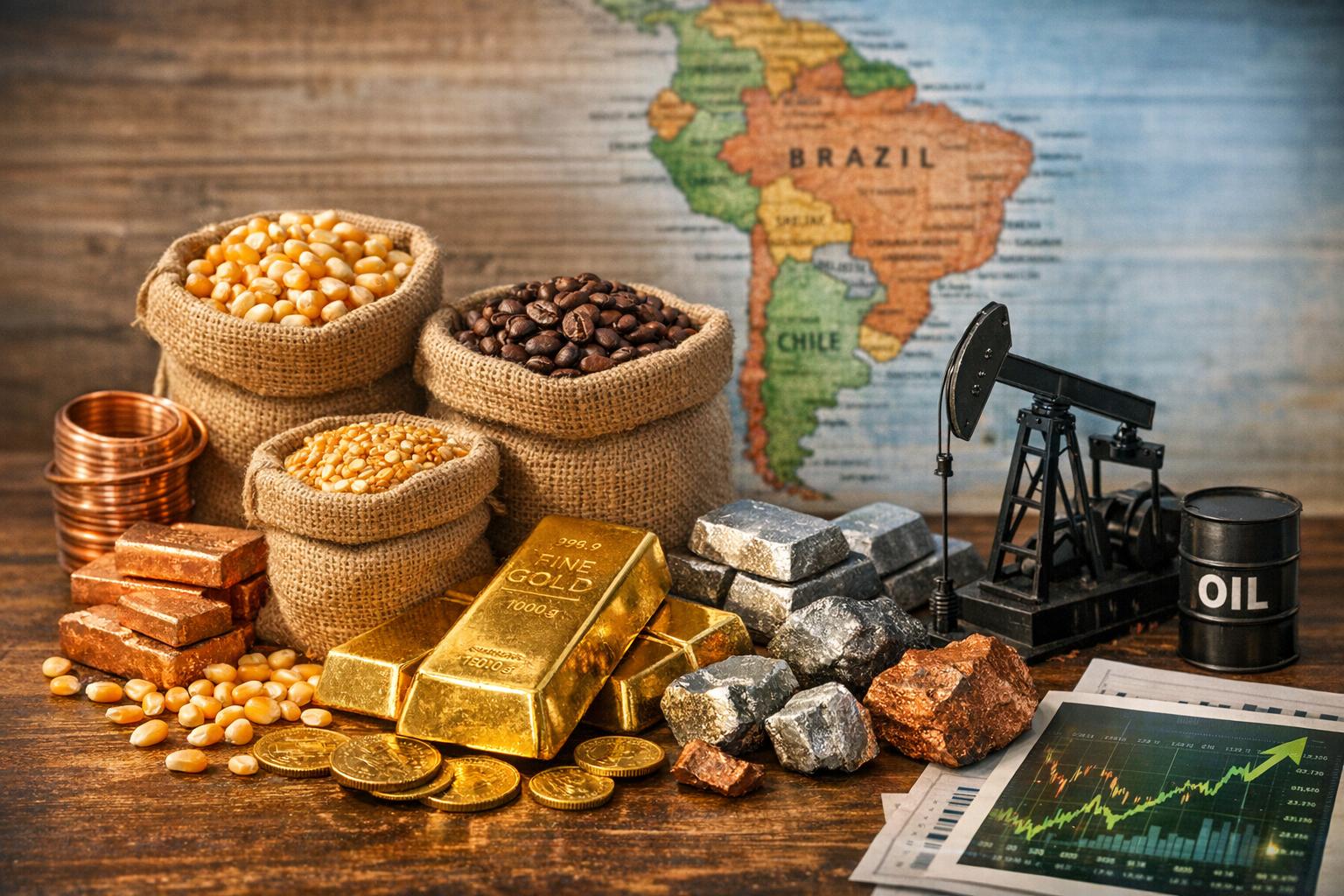
Commodities have historically played a central role in Latin American economies. The region possesses abundant natural resources, including oil, copper, lithium, iron ore, soybeans, coffee, and precious metals. As a result, commodities influence not only export revenues and fiscal balances but also financial markets, currency movements, and long-term investment strategies. For domestic and international investors, understanding the structural importance of commodities in Latin America is essential for asset allocation, risk management, and portfolio diversification.
The integration of Latin America into global commodity markets has shaped its financial architecture. Stock exchanges, sovereign bond markets, currency regimes, and banking systems have all evolved within the framework of commodity-driven trade flows. External accounts, fiscal planning, and monetary stability often depend on price movements in global raw material markets. Consequently, commodity analysis is deeply embedded in macroeconomic forecasting and investment research covering the region.
Structural Importance of Commodities in Latin America
Latin America remains one of the most resource-rich regions in the world. Countries such as Brazil, Chile, Peru, Mexico, Colombia, and Argentina derive a significant share of export revenue from primary goods. In several cases, commodities account for more than half of total merchandise exports. This structural dependence shapes macroeconomic policy, exchange rate behavior, and the performance of equity and credit markets.
The prominence of commodities is partly rooted in history. Since colonial times, the region has been integrated into global trade through the export of raw materials. Silver from Peru and Mexico, sugar from Brazil and the Caribbean, and later coffee and rubber established export-oriented economic structures. Despite industrialization efforts during the twentieth century, commodities still represent a large share of foreign direct investment and government revenue. For investors, this creates both opportunity and concentration risk, as growth cycles may depend disproportionately on a limited set of products.
Commodity cycles strongly affect economic growth. Periods of high global demand and strong prices—such as the early 2000s commodity boom—often lead to fiscal surpluses, currency appreciation, and increased infrastructure spending. Corporate earnings in extractive industries expand, improving tax collection and dividend payments from state-owned enterprises. In contrast, downturns in commodity prices can trigger fiscal tightening, currency depreciation, reduced capital expenditure, and broader market volatility. These fluctuations influence credit spreads, equity valuations, and cross-border capital flows.
Structural exposure also affects labor markets and regional development. Mining-intensive areas in Chile or Peru, oil-producing regions in Colombia, and agricultural zones in Brazil depend heavily on commodity-linked employment. Regional economic disparities can widen during downturns, introducing political considerations that may influence regulatory frameworks and fiscal transfers.
Energy Commodities and Hydrocarbon Exposure
Oil and natural gas remain critical for several Latin American economies. Brazil and Mexico are among the largest oil producers in the region, while Colombia and Ecuador also depend heavily on crude exports. Energy commodities generate export earnings and significantly affect sovereign credit risk, corporate bond markets, and fiscal sustainability.
National oil companies such as Petrobras in Brazil, Pemex in Mexico, and Ecopetrol in Colombia perform dual roles as commercial entities and strategic fiscal pillars. Their capital expenditure plans influence domestic supply chains, while dividend policies and tax contributions materially affect government budgets. In equity markets, these companies often represent substantial index weightings, meaning oil price fluctuations can shape overall market performance.
From a fixed-income perspective, debt issued by state-controlled energy firms may trade in close alignment with sovereign bonds. Investors evaluate production costs, reserve replacement ratios, and currency exposure alongside oil price forecasts. When global crude benchmarks rise, cash flows strengthen and leverage metrics may improve. However, capital-intensive upstream investment can also generate balance sheet pressure during price downturns.
Energy exposure introduces exchange rate sensitivity. Oil-exporting countries typically experience currency appreciation during price rallies due to improved trade balances and increased foreign exchange inflows. Conversely, declines in Brent or WTI prices often correspond to currency depreciation and inflationary pressure. This relationship affects carry trades and hedging strategies in emerging market portfolios.
Beyond conventional hydrocarbons, energy diversification is becoming more prominent. Brazil has developed large-scale biofuel production based on sugarcane ethanol, integrating agriculture and energy markets. Argentina’s Vaca Muerta shale formation has attracted international investment, while regional renewable energy development—particularly wind and solar projects in Chile and Mexico—introduces additional capital allocation themes. These shifts create differentiated risk profiles within the broader energy sector.
Mining and Metals: A Foundation of Export Strength
Latin America is one of the world’s leading producers of copper, iron ore, silver, gold, and lithium. Chile and Peru account for a substantial share of global copper output, a resource essential to construction, infrastructure, and electrical systems. Brazil is a dominant supplier of iron ore, a critical input in steel manufacturing. Mexico and Peru are major producers of silver, while gold mining remains significant in several Andean countries.
Mining companies often dominate domestic equity indices. The performance of large firms such as Vale in Brazil or major copper producers in Chile directly influences pension fund returns and international exchange-traded fund allocations. Because metal demand is closely tied to industrial activity, particularly in China and other Asian economies, Latin American markets can exhibit sensitivity to global manufacturing cycles.
Capital investment in mining projects involves long development timelines and substantial upfront expenditure. Investors evaluate ore grades, production costs, logistical infrastructure, and regulatory stability when assessing project viability. Commodity prices determine not only current earnings but also the economic feasibility of future expansion plans.
Lithium has emerged as a strategic resource, particularly within Argentina, Chile, and Bolivia. The “lithium triangle” holds some of the world’s largest reserves, making the region critical for battery supply chains and electric vehicle production. Governments are developing policy frameworks to balance foreign investment with domestic value capture. Royalty structures, state participation models, and environmental safeguards affect investment decisions.
Environmental and social considerations represent an increasingly important dimension of mining exposure. Water usage in arid areas, community engagement, and transparent revenue management practices influence project stability. Investors integrate ESG assessments into valuation models, recognizing that operational disruptions may stem from social conflicts or stricter environmental standards.
Agricultural Commodities and Soft Commodity Exposure
Agricultural production constitutes another foundational pillar of Latin America’s commodity profile. Brazil is a leading exporter of soybeans, corn, sugar, and beef, while Argentina plays a central role in global soybean meal and corn markets. Coffee remains a key export for Brazil and Colombia, and countries in Central America depend heavily on specialty coffee and banana exports.
Agricultural output contributes to trade surpluses, rural employment, and domestic consumption patterns. Unlike mining and oil, agriculture interacts more directly with household income distribution, land use policies, and food price inflation. In several countries, agricultural exports help offset trade deficits in manufactured goods.
Price fluctuations in agricultural markets can have immediate macroeconomic effects. Rising food prices may contribute to higher consumer inflation, influencing monetary policy decisions. Central banks must assess whether commodity-driven inflation is temporary or likely to feed into broader price expectations. Bond investors monitor these developments to estimate real yield trajectories and currency performance.
Weather variability introduces a distinct layer of risk. Climatic phenomena such as El Niño and La Niña can significantly alter rainfall patterns, affecting crop yields across Brazil, Argentina, and Peru. Drought conditions may depress production volumes, while excessive rainfall can damage transport infrastructure. These supply-side shocks affect export revenues and sometimes global food prices.
Sustainability considerations also influence investment frameworks. International buyers increasingly demand traceability and deforestation controls, particularly in relation to soybean cultivation and cattle ranching in Brazil. Compliance with environmental standards can shape access to export markets and financing conditions for agribusiness firms.
Commodities and Currency Dynamics
Currencies in Latin America often function as commodity-linked currencies. The Brazilian real tends to show correlation with iron ore and soybean prices, the Chilean peso with copper, and the Colombian peso with oil. These correlations emerge through trade balances, foreign exchange inflows, and market sentiment regarding fiscal sustainability.
For international investors, currency exposure can substantially influence total returns. Even when local asset prices rise, currency depreciation may offset gains. Conversely, commodity-driven currency appreciation can amplify equity and bond returns. As a result, commodity forecasts frequently inform hedging strategies and derivative positioning.
Exchange rate regimes vary across the region, but most major economies operate under floating frameworks. This flexibility allows currencies to absorb external shocks, though it also introduces volatility. Central banks may intervene to smooth excessive fluctuations, particularly when rapid depreciation threatens inflation stability.
Carry trade strategies sometimes benefit from high nominal interest rates in commodity-exporting countries. However, these trades remain vulnerable to abrupt commodity price reversals and global risk aversion episodes. Investors typically assess both structural commodity exposure and global liquidity conditions before allocating to regional currencies.
Commodities in Sovereign Credit and Fiscal Policy
Government revenues in several Latin American economies depend directly on commodity taxation, royalties, and dividends from state-owned enterprises. This linkage affects sovereign credit ratings and perceptions of debt sustainability. Rating agencies and institutional investors evaluate fiscal breakeven commodity prices to determine vulnerability to external shocks.
Chile provides an example of countercyclical fiscal management through stabilization funds financed by copper revenues. By saving during periods of high prices, authorities aim to cushion downturns and maintain predictable public spending. Such mechanisms can reduce pro-cyclicality and enhance investor confidence.
In contrast, countries with limited fiscal buffers may face widening deficits when commodity prices decline. Higher borrowing requirements can increase bond yields and pressure exchange rates. Market participants assess the credibility of fiscal rules, transparency of revenue reporting, and debt maturity profiles when pricing sovereign risk.
Commodity-backed financing arrangements, including pre-export facilities and structured loans, add complexity to sovereign balance sheets. Investors analyze these instruments to understand contingency liabilities and refinancing risk. Transparent governance practices tend to support more stable access to international capital markets.
Diversification and Portfolio Strategy
For global investors, Latin America presents both concentrated commodity exposure and opportunities for strategic diversification. Direct exposure may involve equity stakes in mining, energy, or agricultural firms, as well as commodity futures or structured products linked to raw material prices. Indirect exposure arises through sovereign bonds, local corporate credit, and currency positions influenced by commodity cycles.
The diversification benefits of commodity exposure depend on correlation patterns. Commodity-producing economies may outperform during periods of strong global industrial demand, while underperforming during synchronized global downturns. Portfolio managers evaluate correlation matrices across asset classes to determine optimal allocation weights.
Domestic institutional investors also manage concentration risk. Pension funds in Chile, Peru, and Colombia have increased allocations to foreign assets to reduce reliance on local commodity-driven cycles. Regulatory reforms have gradually expanded permissible foreign investment limits, supporting broader diversification.
Multi-asset strategies often incorporate scenario analysis based on commodity price assumptions. Stress testing portfolios against oil price declines or copper demand contractions allows investors to evaluate potential drawdowns. Risk management frameworks regularly incorporate sensitivity analysis linked to primary export commodities.
The Impact of China and Global Demand Patterns
China has become a principal trading partner for many Latin American countries. Demand for copper, iron ore, soybeans, and oil has reinforced trade linkages and reshaped export destinations. As China’s economy transitioned toward infrastructure expansion and industrial production in the early twenty-first century, Latin American commodity exporters experienced significant revenue growth.
Shifts in Chinese policy, including adjustments to property market regulation or environmental standards, can influence commodity demand and pricing. Investors monitor Chinese manufacturing indices, credit growth data, and fiscal stimulus measures to anticipate potential spillover effects into Latin American markets.
Trade diversification efforts aim to reduce overreliance on any single partner. Agreements with the United States, the European Union, and regional blocs contribute to a broader export base, though China remains central in metals and agricultural markets. Geopolitical considerations increasingly factor into long-term commodity supply agreements and infrastructure financing arrangements.
Energy Transition and Emerging Commodity Themes
The global transition toward lower-carbon energy systems is reshaping the investment landscape. Latin America’s endowment of copper and lithium positions it as a key supplier for renewable energy infrastructure and battery technology. Demand projections for these materials are influenced by electrification trends, electric vehicle adoption, and grid modernization.
At the same time, fossil fuel exporters face medium- and long-term uncertainties. Declining demand scenarios for oil could alter fiscal trajectories if diversification efforts are insufficient. Governments and corporations are therefore examining hydrogen production, offshore wind potential, and expanded solar capacity.
Access to sustainable finance increasingly depends on environmental performance. Investors integrating ESG metrics assess carbon intensity, water usage, and community relations. Compliance with international reporting standards can reduce financing costs and broaden the investor base for commodity producers.
Risks and Volatility Considerations
Commodity-driven economies are inherently cyclical. Global interest rate changes, trade policy adjustments, or technological innovation can significantly alter demand for specific resources. Latin American financial markets often reflect these global developments through shifts in equity valuations, bond spreads, and currency levels.
Political developments may also intersect with resource management. Changes in royalty rates, taxation, or state participation can affect project economics. Investors frequently conduct jurisdictional risk assessments, comparing legal stability and contract enforcement practices across countries.
Climate risk introduces both physical and transition dimensions. Extreme weather events may disrupt agricultural output and infrastructure, while water scarcity can constrain mining operations. Meanwhile, carbon regulation and shifting consumption patterns influence fossil fuel outlooks. Long-term investment strategies increasingly integrate climate scenario analysis.
Conclusion
Commodities remain a defining feature of Latin American investment strategies. Their influence extends beyond export earnings to shape fiscal balances, currency dynamics, equity index composition, sovereign credit profiles, and monetary policy decisions. Energy, mining, and agriculture each contribute distinct channels of transmission from global markets to domestic financial systems.
Effective engagement with Latin American assets requires systematic analysis of global commodity trends, domestic regulatory frameworks, fiscal discipline, and environmental governance standards. Commodity exposure can offer diversification and growth opportunities, but it necessitates careful monitoring of cyclical volatility and policy developments.
As technological change, decarbonization, and evolving trade relationships transform global demand patterns, the region’s strategic importance in supplying critical resources is likely to persist. The long-term investment outlook will depend on how successfully Latin American economies balance resource extraction with macroeconomic stability, institutional strength, and sustainable development objectives.
About the Author