How Regulation Impacts Investment Returns in Latin America
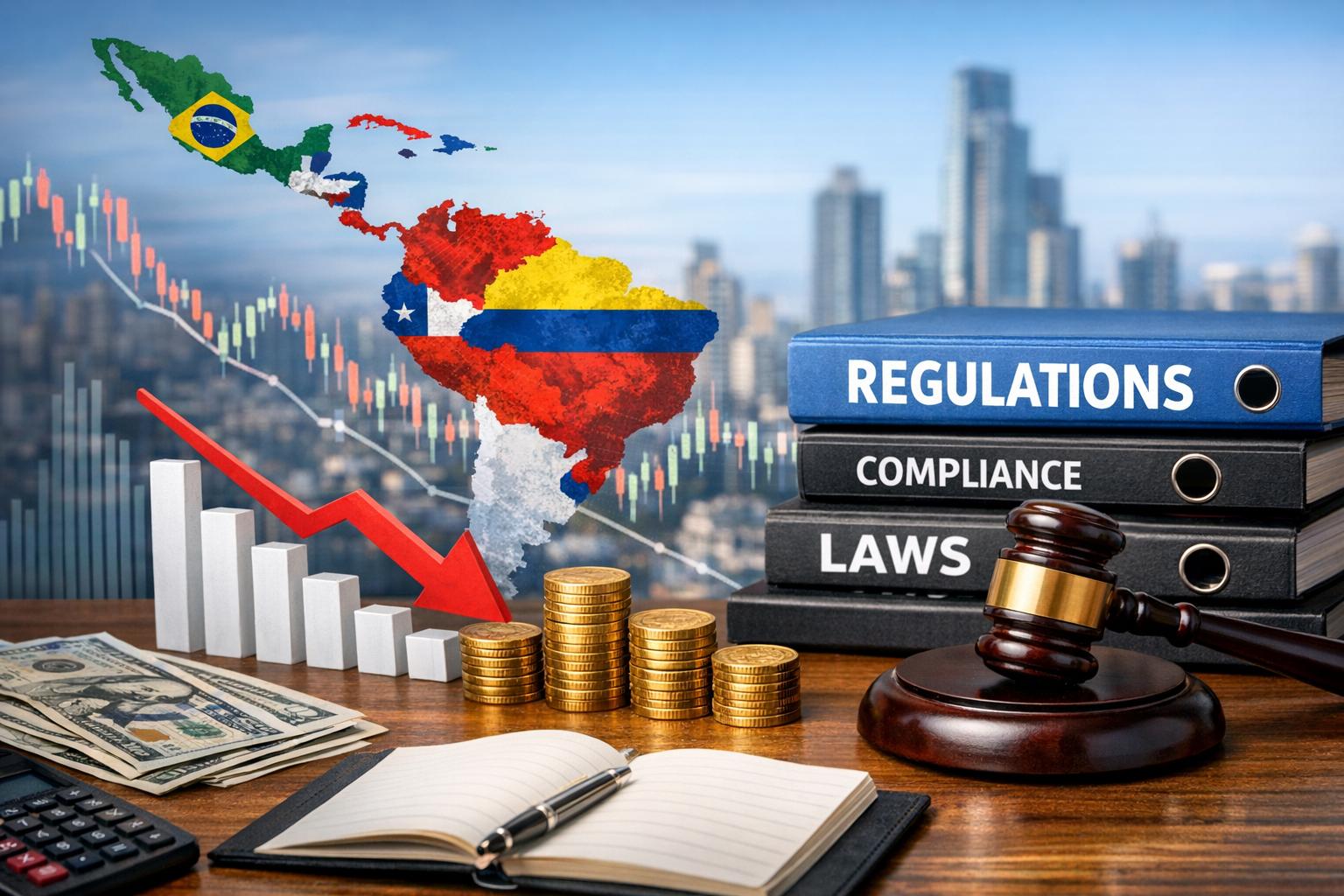
Regulation plays a central role in shaping investment returns across Latin America. The region is characterized by diverse political systems, varying levels of institutional development, abundant natural resources, and periodic economic volatility. In this context, regulatory frameworks influence capital allocation, risk premiums, market liquidity, and long-term growth prospects. Investors operating in Latin America must evaluate not only macroeconomic indicators but also the quality, consistency, and predictability of regulation. The relationship between regulation and returns is neither uniformly positive nor negative. Instead, it depends on how rules are designed, implemented, and enforced.
The Institutional Framework and Investor Confidence
Institutional quality is often the starting point for understanding how regulation affects returns. Strong institutions, including independent courts, enforceable contracts, professional civil services, and transparent regulators, reduce uncertainty. Lower uncertainty contributes to lower discount rates applied to future cash flows, directly influencing asset valuations. Countries that have invested in strengthening administrative capacity and judicial independence tend to provide more predictable operating environments, allowing investors to model long-term returns with greater confidence.
Institutional strength is not limited to formal regulations written in statutes. It includes enforcement capacity, consistency of interpretation, and the perceived impartiality of decision-making. Where regulatory agencies operate with technical expertise and political insulation, regulatory adjustments are often incremental and consultative. These characteristics reduce abrupt changes that could otherwise alter business models or revenue projections.
In contrast, inconsistent enforcement or abrupt regulatory shifts increase risk premiums. Investors demand higher expected returns to compensate for regulatory uncertainty, particularly in capital-intensive sectors such as utilities, transport infrastructure, and energy extraction. This dynamic is observable in jurisdictions where policy reversals, retroactive taxation, or sudden subsidy eliminations have occurred. Even when short-term returns appear elevated, long-term valuations may be discounted if regulatory predictability is weak.
Regulatory credibility becomes embedded in capital market indicators. Sovereign bond spreads reflect perceptions of fiscal discipline and institutional reliability. Equity valuations incorporate expectations of stability in corporate governance standards and investor protections. Foreign direct investment inflows tend to gravitate toward jurisdictions where dispute resolution mechanisms are reliable and contract terms are respected.
Tax Policy and Capital Allocation
Tax regulation has a direct and measurable impact on investment returns. Corporate income taxes, capital gains taxes, withholding taxes on dividends, financial transaction taxes, and sector-specific royalties materially alter net yields. In resource-rich countries such as Brazil, Mexico, Colombia, Peru, and Argentina, fiscal regimes targeting oil, gas, mining, and agriculture significantly influence project feasibility and internal rates of return.
Frequent tax changes generate uncertainty that can deter long-term commitments. Adjustments to depreciation schedules, loss carryforward rules, or value-added tax recovery mechanisms affect financial modeling assumptions. When governments revise royalty structures or implement windfall profit taxes during commodity price booms, investors may reassess country risk. Such measures can improve fiscal balances but may create perceptions of cyclical regulatory tightening.
At the same time, tax frameworks can be structured to provide stability. Long-term stability agreements in mining concessions, for example, may lock in defined fiscal terms for extended periods, reducing uncertainty. Predictable tax administration, transparent audit processes, and clear dispute resolution mechanisms further reinforce investor confidence.
Tax incentives can also stimulate targeted sectors. Preferential treatment for renewable energy investments, technology parks, export processing zones, or logistics hubs shapes capital allocation. Brazil’s regional development incentives and Mexico’s maquiladora framework illustrate how tax policy can promote industrial diversification. However, incentives must be weighed against fiscal sustainability. If incentive regimes become overly complex or subject to frequent revision, anticipated return advantages may diminish.
Financial Market Regulation
The depth and resilience of financial markets depend on regulatory quality. Securities regulators, banking supervisors, insurance authorities, and pension regulators establish disclosure standards, capital adequacy requirements, and governance frameworks. After global financial disruptions, multiple Latin American countries strengthened prudential regulation, incorporating elements of international banking standards and enhancing supervision.
Enhanced disclosure rules improve transparency and reduce information asymmetry. Reliable financial reporting allows equity investors to refine earnings projections and discount rate assumptions. Brazil’s Novo Mercado listing segment is often cited as a regional benchmark for higher governance standards, requiring enhanced voting rights and greater transparency. Firms adhering to higher governance standards have often been associated with broader foreign investor participation and improved liquidity.
Bank capitalization regulations and stress testing mechanisms reduce systemic risks. Strong supervision of credit portfolios can limit the buildup of non-performing loans and align lending growth with macroeconomic fundamentals. In turn, systemic stability reduces the likelihood of abrupt credit contractions that could affect corporate earnings and investment performance.
Nevertheless, compliance costs associated with stricter regulation can weigh on smaller issuers. Increased reporting obligations, auditing expenses, and governance requirements may discourage initial public offerings by mid-sized enterprises. Excessively complex regulatory frameworks can shift capital formation toward informal markets or private financing channels. Effective regulation must balance investor protection with market efficiency, ensuring transparency without suppressing entrepreneurial growth.
Foreign Investment Controls and Capital Mobility
Foreign direct investment and portfolio flows are sensitive to capital account policies and ownership restrictions. Certain Latin American jurisdictions impose caps on foreign participation in strategic industries such as aviation, telecommunications, energy transmission, or media. While these restrictions may be framed as safeguarding national interests, they limit the pool of potential investors and can elevate capital costs.
Capital controls affect both anticipated and realized returns. When investors anticipate obstacles to repatriating dividends or converting local currency into foreign currency, required returns increase to compensate for liquidity and convertibility risk. Historical episodes of exchange controls and transfer restrictions provide evidence of how quickly sentiment can shift when regulatory intervention affects cross-border capital flows.
By contrast, sustained openness to foreign investment contributes to diversified capital markets and can reduce borrowing costs. Jurisdictions providing nondiscriminatory treatment between domestic and foreign investors, along with stable investment protection treaties, often benefit from more consistent capital inflows. This dynamic can reinforce currency stability and improve local market liquidity, supporting overall return prospects.
Energy and Natural Resource Regulation
Latin America’s significant reserves of lithium, copper, oil, iron ore, and agricultural commodities place natural resource regulation at the center of investment analysis. Licensing procedures, concession durations, environmental oversight, and state participation directly determine project economics. Because resource extraction projects are capital-intensive and long-term, regulatory stability is particularly critical.
Changes in concession rules or contract renegotiations can alter expected cash flows substantially. Adjustments in profit-sharing agreements, local content requirements, or export quotas affect operating margins. Investors incorporate these potential policy shifts into scenario analyses, adjusting expected returns based on the probability of regulatory transition.
Environmental regulation has gained prominence across the region. Stricter environmental licensing procedures may extend project timelines and increase compliance costs. However, clear and consistently applied environmental standards reduce litigation risk and provide clarity regarding permissible activities. Institutional investors guided by environmental, social, and governance criteria frequently assess regulatory frameworks when allocating capital. Transparent environmental governance can facilitate access to broader funding sources, potentially lowering financing costs.
Labor Regulation and Operating Costs
Labor laws shape cost structures, productivity dynamics, and long-term competitiveness. Regulations covering minimum wages, severance obligations, collective bargaining frameworks, and subcontracting practices affect corporate margins. Changes in pension contributions or social security taxes alter effective labor costs and can influence location decisions for manufacturing and service operations.
Flexible labor arrangements may attract foreign manufacturers seeking scalable operations. Conversely, protective labor frameworks can contribute to social stability and mitigate workforce disruptions. Investors typically assess labor regulation in conjunction with demographic trends, education levels, and productivity growth. The interaction between labor regulation and macroeconomic policy determines whether wage increases align with productivity gains or generate cost pressures.
Reforms aimed at modernizing labor codes can alter sectoral profitability. Adjustments to overtime rules, remote work provisions, or dispute resolution mechanisms directly influence operational flexibility. For investors, the critical factor is not merely the protective strength of labor regulations, but their predictability and enforceability.
Infrastructure Regulation and Public-Private Partnerships
Infrastructure gaps in transportation, energy distribution, water management, and telecommunications have historically constrained growth across parts of Latin America. Regulatory frameworks governing public-private partnerships determine risk allocation and revenue certainty. Investors seek clarity on tariff formulas, inflation indexation mechanisms, force majeure clauses, and arbitration procedures.
Transparent bidding processes and standardized concession contracts reduce uncertainty. Independent regulatory agencies overseeing toll adjustments or energy tariffs further enhance predictability. Where these mechanisms function effectively, long-term infrastructure assets can deliver stable cash flows indexed to inflation or economic activity.
Renegotiations or politically motivated tariff freezes can materially alter projected returns. Infrastructure investors often conduct sensitivity analyses examining regulatory intervention scenarios. Even modest adjustments to permitted tariff increases can significantly influence internal rate of return calculations, particularly over multi-decade concession periods.
Monetary Policy, Banking Regulation, and Credit Conditions
Central bank independence underpins monetary stability. Countries maintaining credible inflation-targeting regimes have generally experienced lower inflation volatility. Stable inflation supports predictable interest rates, affecting bond yields, mortgage markets, and corporate financing costs. Investors evaluating fixed-income instruments assess the credibility of monetary authorities alongside fiscal discipline.
Banking supervision complements monetary policy. Adequate capital buffers, dynamic provisioning standards, and effective resolution frameworks reduce systemic risk. Latin America’s experience with financial crises in previous decades led to institutional reforms that strengthened prudential oversight. As a result, many banking systems in the region have demonstrated resilience during periods of global financial stress.
Where financial regulation weakens, credit misallocation and currency mismatches can emerge. Exchange rate depreciation combined with unhedged foreign-currency borrowing can destabilize banking sectors. The resulting contraction in credit availability may reduce corporate earnings, affecting equity returns and bond performance.
Political Cycles and Regulatory Volatility
Political transitions frequently influence regulatory trajectories. Electoral platforms may propose subsidy reforms, adjustments to price controls, or shifts in industrial policy. Markets attempt to anticipate these changes through forward-looking pricing mechanisms. Equity volatility often increases ahead of elections perceived as potentially transformative.
In jurisdictions with strong institutional checks and balances, policy changes may proceed through legislative negotiation, moderating abrupt shifts. In systems with concentrated executive authority, regulatory adjustments may occur more rapidly. Investors analyze legislative composition, coalition dynamics, and judicial independence to estimate the durability of proposed reforms.
Regulatory volatility increases uncertainty and expands required risk premiums. However, investors capable of accurately modeling reform scenarios may identify relative mispricing during transitional periods. The interplay between political developments and regulatory institutions remains a defining characteristic of regional investment analysis.
Trade Policy and Regional Integration
Trade regulation shapes export competitiveness and supply chain integration. Trade agreements influence tariff schedules, rules of origin, dispute resolution mechanisms, and customs procedures. Export-oriented economies within Latin America rely on stable trade policy to attract manufacturing investment.
Regional blocs such as Mercosur and the Pacific Alliance aim to harmonize standards and facilitate cross-border commerce. Participation in broader agreements with North America, Europe, and Asia further integrates supply chains. Regulatory alignment lowers compliance costs and enhances predictability for multinational corporations assessing regional expansion.
Protectionist adjustments, import licensing requirements, or administrative trade barriers can introduce uncertainty. Export-dependent sectors such as agriculture and mining are particularly sensitive to foreign tariff policies and domestic export restrictions. Investors therefore evaluate trade policy stability as a component of expected revenue growth.
ESG Regulation and Sustainable Finance
Environmental and social governance regulation increasingly shapes capital allocation. Mandatory climate-related risk disclosures, green bond standards, and sustainability reporting frameworks affect corporate financing conditions. Several Latin American capital markets have introduced guidelines for labeled green or sustainability-linked bonds.
Stronger ESG regulation may initially increase compliance expenditures. Firms must invest in data collection, reporting systems, and operational upgrades. However, access to dedicated sustainable investment funds may offset these costs by diversifying funding sources and potentially lowering borrowing rates. Long-term environmental risk mitigation can also reduce the probability of operational disruptions or legal disputes.
As global asset managers integrate sustainability considerations into portfolio selection, regulatory alignment with international ESG standards may enhance competitiveness. Investors thus consider both immediate compliance costs and potential long-term capital access advantages.
Currency Controls and Exchange Rate Regimes
Exchange rate policy significantly affects realized returns for foreign investors. Floating exchange rate regimes allow currency values to adjust to market conditions, potentially absorbing external shocks. Managed or heavily controlled regimes may stabilize short-term volatility but can create distortions if market pressures accumulate.
Currency controls, multiple exchange rate systems, or restrictions on foreign currency transactions complicate valuation models. Investors must analyze convertibility mechanisms, access to foreign exchange markets, and central bank reserve adequacy. Even when nominal yields appear attractive, real returns may decline if currency depreciation or restricted access to foreign exchange erodes value.
Exchange rate risk management strategies, including hedging instruments, depend on regulatory permission and market liquidity. Well-developed derivatives markets enable more precise risk mitigation, while regulatory limitations on hedging tools heighten uncertainty.
Regulatory Reform Trends and Outlook
Reform trajectories across Latin America diverge according to domestic political priorities and economic conditions. Digitalization of tax systems, modernization of customs administration, and online corporate registries have improved efficiency in several jurisdictions. Reduced administrative friction lowers compliance costs and enhances transparency.
Simultaneously, discussions around industrial policy, strategic resource management, and income redistribution continue to influence regulatory direction. Policymakers balance fiscal sustainability, social objectives, and competitiveness concerns. Investors monitoring reform proposals must evaluate implementation feasibility and institutional capacity.
Long-term returns in Latin America will remain closely linked to regulatory evolution. Markets respond not only to enacted laws but also to the perceived trajectory of governance quality and policy coherence. Countries that institutionalize transparent rulemaking processes and uphold contractual integrity are more likely to maintain favorable risk-return profiles.
Conclusion
Regulation in Latin America exerts a multidimensional influence on investment returns. Taxation, financial supervision, capital controls, labor policy, environmental standards, infrastructure governance, and trade agreements collectively shape risk and reward dynamics. Institutional strength and policy predictability frequently matter more than the absolute regulatory burden.
Investors assessing opportunities in the region integrate regulatory analysis into valuation models, scenario planning, and portfolio diversification strategies. Stable and transparent regulatory environments tend to compress risk premiums and attract sustained capital inflows. Conversely, inconsistency or abrupt intervention raises required returns and may deter long-term commitments.
Latin America’s diversity ensures that regulatory impacts vary across countries and sectors. A comprehensive understanding of regulatory structures, enforcement practices, and reform trajectories is essential for accurately estimating expected returns and navigating the region’s complex investment landscape.
About the Author