Long-Term vs. Short-Term Investment Strategies in Latin America
Introduction to Investment Horizons in Latin America
Investment strategies in Latin America vary significantly depending on time horizon, risk tolerance, macroeconomic conditions, and regulatory frameworks. The distinction between long-term and short-term approaches is particularly relevant in this region due to its historical exposure to volatility, political shifts, commodity cycles, and currency fluctuations. Investors operating in Latin American markets must evaluate structural growth opportunities alongside cyclical risks, which makes understanding time horizon strategies essential for capital allocation decisions. The region offers a combination of mature financial centers and emerging frontier environments, creating a spectrum of opportunity sets that differ markedly from those in developed economies.
Latin America includes diverse economies such as Brazil, Mexico, Chile, Colombia, Peru, and Argentina, each with unique market dynamics. While some economies demonstrate relative institutional stability and developed financial markets, others face persistent inflationary pressures and currency instability. These structural differences shape how investors design strategies over short or extended time frames. Asset allocation, liquidity management, and currency positioning often vary not only between countries but also within sectors of the same economy. As a result, time horizon selection becomes a foundational decision that influences all subsequent portfolio construction choices.
Macroeconomic Context and Regional Characteristics
Latin America’s economies have historically been influenced by commodity exports, including oil, copper, soybeans, iron ore, and lithium. Commodity price cycles heavily impact fiscal balances, exchange rates, and corporate earnings. When global demand rises, export revenues strengthen public finances and corporate profitability. Conversely, price declines can trigger budget deficits and currency depreciation. Short-term investors frequently respond to these fluctuations by adjusting exposure in equities, sovereign bonds, and currency markets. Long-term investors, by contrast, consider how resource endowments position the region within broader structural transformations such as electrification, digitalization, and the global energy transition.
Inflation has been a recurring theme in several Latin American countries. Nations like Argentina have experienced chronic high inflation, while Brazil has faced periodic inflation spikes despite a relatively credible central bank. Mexico and Chile have maintained comparatively stable monetary frameworks over the past decades. Inflation and currency risk influence asset selection, particularly in fixed-income securities, and determine whether investors prioritize tactical gains or sustained capital appreciation. Credible monetary authorities can anchor expectations, making long-duration strategies more viable, whereas environments of policy inconsistency often shorten the effective investment horizon.
Fiscal dynamics also influence investment outcomes. Government debt levels, primary balances, and tax reform initiatives affect sovereign ratings and borrowing costs. Investors must assess debt sustainability trajectories when evaluating both short-term bond trades and long-term sovereign exposure. In addition, the composition of public revenues—whether dependent on commodities or diversified taxation—can determine sensitivity to external shocks.
Defining Short-Term Investment Strategies
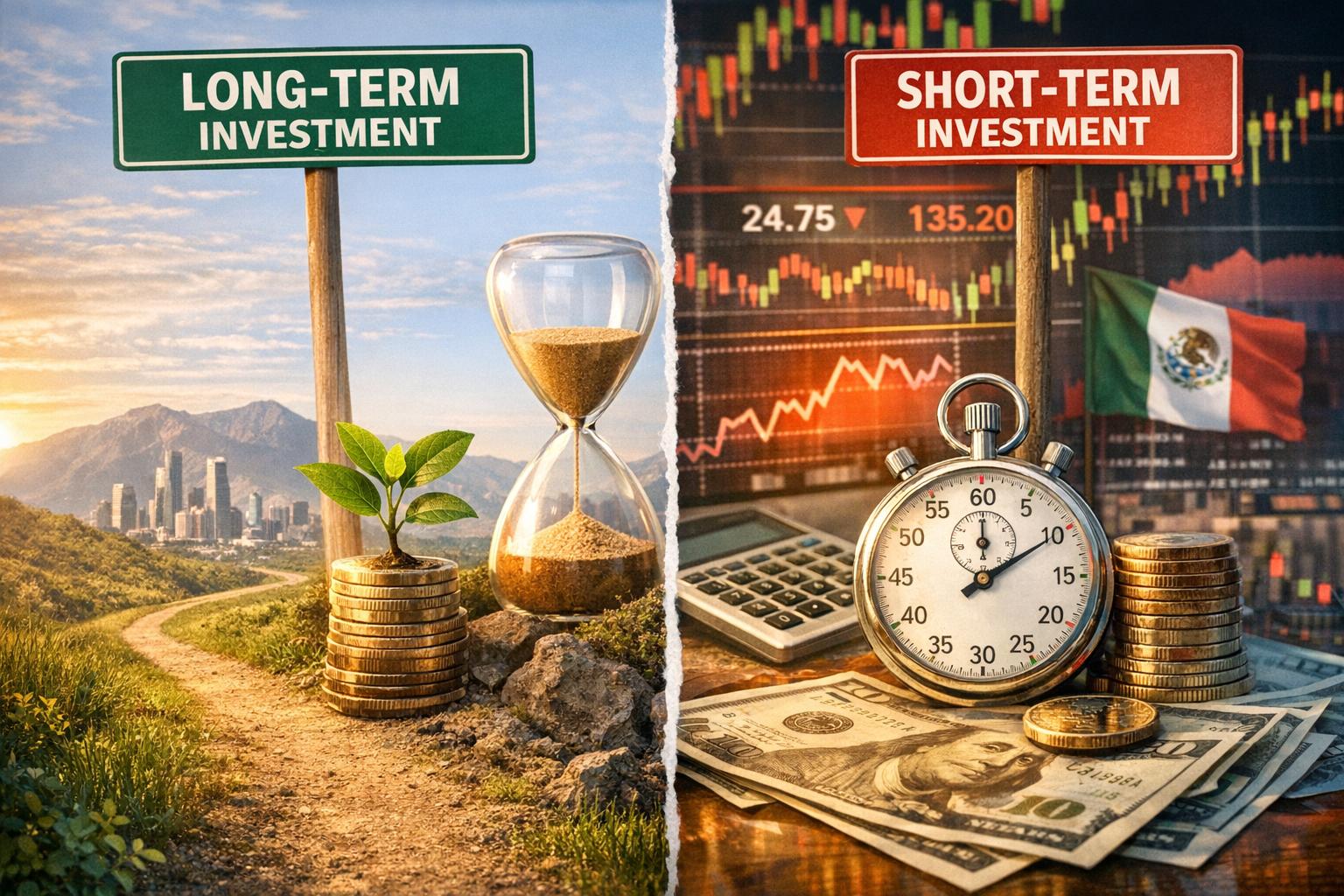
Short-term investment strategies generally focus on time horizons ranging from intraday positions to less than three years. These strategies aim to capitalize on price volatility, macroeconomic announcements, political developments, central bank decisions, and earnings cycles. In Latin America, volatility can provide recurring trading opportunities due to shifting fiscal policies, public reforms, and global risk sentiment toward emerging markets. Short-term approaches emphasize liquidity, rapid information processing, and disciplined risk controls.
Equities, sovereign bonds, corporate bonds, currencies, and exchange-traded funds are commonly used instruments. Derivatives markets, particularly futures and options linked to Brazilian equities, interest rates, and currencies, also enable hedging and tactical positioning. Currency trading plays a significant role in short-term positioning, given fluctuations in the Brazilian real, Mexican peso, Chilean peso, and Colombian peso in response to commodity prices and U.S. interest rate changes.
Short-Term Equity Strategies
Equity markets in Brazil and Mexico are the most liquid in the region, with active participation from domestic and foreign institutions. Short-term strategies often focus on cyclical sectors such as energy, mining, financials, and consumer discretionary stocks. Traders respond to quarterly earnings reports, legislative developments, and shifts in global price benchmarks. Earnings revisions can generate rapid repricing of shares, particularly for exporters exposed to currency movements.
Commodity-linked firms frequently exhibit high beta relative to global markets. Rapid changes in oil prices can significantly affect Brazilian or Colombian energy companies. Mining firms in Chile and Peru respond quickly to copper price adjustments driven by industrial demand. Political developments may also influence state-linked enterprises, particularly when governments signal changes in dividend policy, investment mandates, or pricing regulations. Tactical investors therefore monitor regulatory announcements and budget proposals that could alter sector profitability.
Fixed Income and Interest Rate Plays
Short-term opportunities arise in sovereign and corporate debt markets when monetary policy shifts expectations. Latin American central banks have at times maintained elevated benchmark rates to counter inflationary pressure. This environment creates scope for yield curve positioning strategies, including duration adjustments and tactical exposure to short- or medium-term maturities.
Carry trade strategies are frequently implemented when interest rate differentials are substantial. Investors may borrow in low-yield currencies and invest in higher-yielding Latin American instruments. While such trades can deliver attractive income during stable periods, they are sensitive to global liquidity conditions and U.S. Federal Reserve policy. Episodes of risk aversion can result in abrupt capital outflows, affecting bond prices and exchange rates simultaneously. Effective short-term management therefore requires close monitoring of cross-border flows and derivative market signals.
Currency and Cross-Asset Trading
Currencies remain central to short-term engagement with Latin America. Exchange rates reflect commodity prices, fiscal accounts, and interest rate differentials. The Mexican peso, for example, is among the most actively traded emerging market currencies and often serves as a proxy for broader risk sentiment. Short-term participants integrate macroeconomic indicators with technical analysis and liquidity assessments to guide execution decisions.
Cross-asset correlations are relevant. Movements in commodity futures can precede currency adjustments, while sovereign spread changes may signal evolving fiscal risk. Integrated strategies combining equities, bonds, and foreign exchange exposures are common among institutional traders.
Advantages and Risks of Short-Term Strategies
The primary advantage of short-term strategies in Latin America lies in the region’s consistent volatility. Political transitions, fiscal announcements, and trade developments can create measurable price dislocations. Skilled investors may capitalize on temporary inefficiencies or liquidity imbalances.
However, transaction costs, liquidity constraints in smaller markets, and sudden regulatory changes represent operational risks. Certain jurisdictions have implemented capital controls or tax adjustments affecting foreign participation. Currency depreciation can quickly offset nominal asset gains, particularly in high-inflation environments. Effective risk management requires predefined exit criteria and awareness of market depth across instruments.
Defining Long-Term Investment Strategies
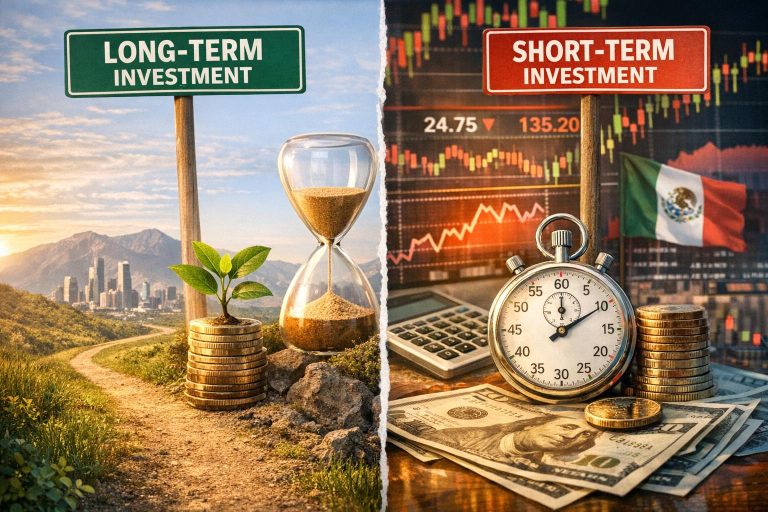
Long-term investment strategies typically extend beyond five years and often span decades. These approaches focus on structural economic themes, demographic evolution, institutional reform, productivity improvements, and integration into global value chains. Long-term participation requires the capacity to withstand interim volatility while maintaining conviction in underlying fundamentals.
Investors adopting such horizons emphasize fundamental analysis, governance quality, and sustainable revenue growth. Rather than responding to daily price movements, they evaluate competitive positioning, cost structures, and regulatory consistency. In emerging markets, valuation discipline is also central, as entry points can significantly influence eventual returns.
Demographic and Consumer Growth Trends
Several Latin American countries possess relatively young populations and expanding urban middle classes. Brazil and Mexico have large domestic markets that provide depth for consumer-oriented sectors. Long-term investors analyze income growth, credit penetration, housing formation, and educational attainment to assess consumption trajectories. Banks, retailers, healthcare providers, and telecommunications firms may benefit from gradual formalization and digital adoption.
The expansion of digital payments and e-commerce illustrates structural modernization. Financial inclusion initiatives have broadened access to bank accounts and credit services, fostering the emergence of regional fintech platforms. Investors with extended horizons evaluate scalability, technology adoption rates, and regulatory clarity when allocating capital to these industries.
Infrastructure and Energy Transition
Infrastructure deficits remain evident across transportation, sanitation, and logistics networks. Addressing these gaps often requires multi-year planning, public-private partnerships, and regulatory stability. Long-term investors assess concession frameworks, tariff adjustment mechanisms, and contractual enforceability. Infrastructure assets can provide predictable cash flows once operational, aligning with pension fund liabilities.
The energy transition introduces additional strategic considerations. Chile has developed large-scale solar capacity, Brazil maintains a diversified energy matrix, and Argentina and Bolivia hold significant lithium reserves. These resources position the region within global battery and renewable supply chains. Long-duration capital typically evaluates geological risk, environmental compliance, and export infrastructure before committing funds.
Equity Buy-and-Hold Approaches
A buy-and-hold strategy in Latin American equities depends on identifying companies with durable competitive advantages and prudent capital management. Investors examine balance sheets, currency exposure, and revenue diversification. Firms with regional operations may mitigate domestic volatility through geographic spread.
Mexico’s integration with North American manufacturing networks has strengthened its industrial base. Brazil hosts multinational agribusiness and financial firms with substantial domestic scale. Long-term investors often consider how supply chain reconfiguration and trade agreements support sustained earnings growth.
Long-Term Fixed Income Allocation
Long-duration sovereign bonds in relatively stable economies may serve as income-generating assets within diversified portfolios. Inflation-linked bonds are widely used to hedge purchasing power risk. Domestic pension systems frequently allocate capital across duration segments to match actuarial obligations.
The viability of these strategies rests on fiscal discipline, credible monetary policy, and manageable debt trajectories. Investors evaluate sovereign ratings, external balances, and policy transparency when determining exposure levels. In certain markets, local institutional participation enhances stability by reducing dependence on external financing.
Currency Considerations Across Time Horizons
Currency risk influences both short- and long-term strategies. In the short term, exchange rates react to commodity developments, rate differentials, and geopolitical events. In the long term, structural factors such as productivity growth, current account sustainability, and inflation differentials drive currency performance. Persistent inflation above that of trading partners may contribute to gradual depreciation unless offset by productivity gains or reform momentum.
Long-term investors approach currency exposure through diversification or selective hedging. Some may retain unhedged exposure when expecting structural appreciation tied to export growth or institutional reform. Decisions depend on funding currency, liability structure, and overall risk objectives.
Political and Regulatory Environment
Political cycles can materially influence financial markets. Electoral outcomes may affect taxation, state participation in strategic sectors, and foreign investment policy. Short-term investors monitor legislative signals to anticipate market repricing.
Long-term participants concentrate on institutional continuity rather than individual administrations. Judicial independence, contract enforcement, and transparent regulatory processes are central considerations. Countries demonstrating consistent governance standards are more likely to attract sustained foreign direct investment and portfolio inflows.
Private Equity and Venture Capital Perspectives
Private equity and venture capital represent extended-horizon commitments in Latin America, often spanning seven to ten years. Brazil and Mexico have cultivated active startup ecosystems in fintech, logistics, agricultural technology, and enterprise software. Capital deployment decisions emphasize scalability, governance standards, and exit feasibility through public listings or strategic acquisitions.
Macroeconomic volatility can influence valuation benchmarks, yet operational performance remains the primary return driver. Private capital investors frequently incorporate currency hedging, structured financing, and staged capital infusion to manage exposure.
Risk Management Approaches
Risk management varies substantially by time horizon. Short-term strategies employ tight stop-loss protocols, liquidity screens, and active monitoring of macro indicators. Portfolio turnover is typically higher, requiring efficient execution infrastructure.
Long-term investors diversify across sectors and jurisdictions, emphasizing structural resilience rather than daily volatility. Environmental, social, and governance considerations have become integrated into risk assessment frameworks, reflecting both regulatory trends and stakeholder expectations. Scenario analysis and stress testing are standard tools when evaluating exposure to commodities or fiscal deterioration.
Impact of Global Economic Conditions
Latin America remains closely connected to global capital flows. Changes in U.S. interest rates, Chinese industrial demand, and global trade patterns influence asset prices. Short-term investors often respond immediately to shifts in liquidity and risk appetite. Long-term investors evaluate broader transformations such as supply chain diversification, decarbonization policies, and demographic transitions in major trading partners.
Comparative Performance Considerations
The relative performance of short- versus long-term strategies depends on entry valuation, macroeconomic cycle, and policy trajectory. Periods of reform and macro stability have historically supported multi-year equity appreciation. Conversely, episodes of fiscal imbalance or political uncertainty have created sharp drawdowns that reward agile tactical participants.
Compounding benefits tend to favor disciplined long-term investors when growth reforms persist. However, elevated volatility means that active risk calibration remains relevant even for extended-horizon allocations. Blending both approaches can moderate portfolio variance while preserving exposure to structural opportunity.
Institutional Versus Retail Investor Behavior
Institutional investors such as pension funds and insurance companies generally maintain longer time horizons aligned with liability structures. Chile and Peru have developed pension systems with significant regional allocations. These institutions often support domestic capital market depth.
Retail participation has expanded through digital brokerage platforms, facilitating greater access to equities, exchange-traded funds, and derivatives. Retail strategies may skew toward shorter time frames, influenced by market access and informational resources. Regulatory oversight and investor education influence the stability and sophistication of this segment.
Conclusion
Investment strategies in Latin America must accommodate the region’s historical volatility, structural characteristics, and evolving regulatory landscape. Short-term approaches seek to capture price movements triggered by commodity cycles, political developments, and interest rate differentials. They require liquidity, disciplined execution, and responsiveness to macroeconomic signals.
Long-term strategies emphasize demographic expansion, infrastructure modernization, institutional reform, and participation in global value chains. These approaches depend on consistent governance, credible macroeconomic management, and competitive corporate sectors capable of sustaining earnings growth.
Both horizons can contribute to diversified portfolios when aligned with investor objectives and risk parameters. Latin America’s combination of resource endowment, domestic market depth, and periodic volatility ensures that defining the appropriate investment time frame remains central to effective engagement with the region’s financial markets.
About the Author