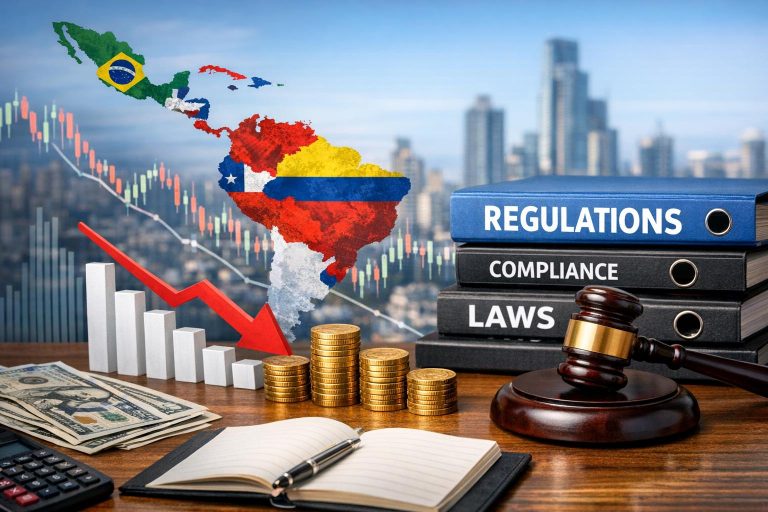
Cross-Border M&A Trends in Latin America
Cross-border mergers and acquisitions (M&A) in Latin America have evolved significantly over the past two decades. The region has moved from being primarily a destination for opportunistic acquisitions to becoming a more structured, strategically targeted market for international capital. While volatility remains a defining characteristic, foreign investors continue to pursue assets in sectors ranging from energy and mining to technology and financial services. This article examines the structural drivers, sectoral trends, regulatory frameworks, financing conditions, and geopolitical dynamics shaping cross-border M&A activity in Latin America, with particular attention to how global capital interacts with regional opportunities.
Macroeconomic Context and Investment Climate
Latin America’s investment environment remains closely tied to global macroeconomic cycles. Commodity export dependence in several major economies means that shifts in global demand, particularly from the United States, China, and the European Union, often influence fiscal balances, exchange rates, and corporate earnings. Brazil and Mexico together account for a significant share of Latin American GDP, and their economic trajectories strongly affect regional capital flows. Chile, Colombia, and Peru, while smaller in scale, maintain strategic importance due to mining exports and relatively developed capital markets.
In the decade prior to the pandemic, cross-border M&A volumes tracked global liquidity conditions. Low interest rates in developed markets pushed institutional investors toward emerging markets in search of yield and growth. The post-2020 period saw a rapid rebound in transactional activity, supported by fiscal stimulus in advanced economies and a reallocation of supply chains. As global monetary tightening accelerated between 2022 and 2024, financing costs rose sharply. Higher benchmark rates reshaped valuation assumptions and constrained leverage, leading to more disciplined bidding processes.
Despite tighter credit conditions, Latin America retained structural appeal. Foreign investors with long investment horizons viewed periods of currency depreciation and market correction as opportunities to acquire assets at discounted valuations. However, exchange-rate volatility introduces complexity into transaction modeling. A weaker local currency may improve purchase price attractiveness in U.S. dollar terms, yet it can also affect debt servicing capacity and raise questions about inflation stability.
Macroeconomic resilience varies by jurisdiction. Countries with credible central banks and fiscal discipline tend to experience quicker recoveries in investor confidence. Sovereign credit ratings influence borrowing costs for domestic corporates, indirectly shaping M&A feasibility. Where sovereign risk premiums widen, domestic targets may face refinancing pressures, creating acquisition opportunities for well-capitalized foreign buyers.
Structural Drivers of Cross-Border Transactions
Several long-term factors underpin sustained cross-border interest in Latin America. The first is natural resource endowment. The region holds substantial reserves of lithium, copper, iron ore, oil, and agricultural land. As global industries transition toward electrification and cleaner energy, control over critical minerals has acquired strategic significance. Multinational corporations and state-backed investors alike pursue upstream integration to secure supply chains.
A second structural factor is demographic scale. With a population exceeding 650 million, Latin America represents a significant consumer base. Urbanization rates are high, and digital adoption is increasing steadily. Middle-income segments in Brazil, Mexico, and parts of the Andean region sustain demand for financial services, telecommunications, healthcare, and consumer goods.
Third, institutional maturation in key markets has improved transaction predictability. Although regulatory fragmentation persists, Brazil, Mexico, Chile, and Colombia have strengthened antitrust enforcement frameworks and corporate governance standards. Capital markets infrastructure, including stock exchanges and local bond markets, has expanded over time, enabling more complex financing structures.
Finally, supply chain diversification strategies by North American and European firms have repositioned parts of Latin America as operational complements to Asia. This “multi-polar” manufacturing model encourages acquisitions of established regional producers rather than solely greenfield investment.
Key Sectors Driving Cross-Border M&A
Energy and Natural Resources
The energy and mining industries continue to anchor cross-border M&A activity. Chile and Peru are among the world’s largest copper producers, central to global electrification. Argentina and Chile form part of the “lithium triangle,” attracting sustained interest from battery manufacturers and automotive companies seeking supply security. Brazil maintains offshore oil reserves, while Colombia has historically been a significant hydrocarbon exporter.
Transactions in extractive sectors frequently involve joint ventures, staged investments, or minority stakes that grant operational participation without immediate full ownership. Earn-out structures tied to commodity price thresholds are common, as they align risk allocation between buyer and seller. Environmental licensing, community relations, and indigenous rights consultations are integral to valuation assessments, often affecting closing timelines.
Renewable energy represents a parallel growth avenue. Brazil and Chile have expanded wind and solar capacity significantly. International utilities and infrastructure funds have acquired portfolios of operational projects with long-term power purchase agreements. These assets provide predictable cash flows relative to commodity-based operations, offsetting exposure to price volatility.
Infrastructure and Utilities
Infrastructure deficits remain substantial across Latin America, creating space for foreign investment. Transportation networks, ports, airports, and water treatment facilities often require modernization. Public-private partnership (PPP) frameworks enable cross-border participation, though contract enforcement reliability varies by jurisdiction.
Electricity transmission and distribution assets attract pension funds and sovereign wealth funds seeking inflation-linked returns. Acquisitions in this sector typically involve detailed regulatory reviews and tariff analyses. Stable regulatory regimes in countries such as Chile have facilitated predictable returns, while more interventionist policies elsewhere require additional contractual safeguards.
Digital infrastructure is emerging as a distinct category. Fiber-optic networks, mobile towers, and data centers are essential to expanding e-commerce and cloud computing adoption. Cross-border acquisitions increasingly focus on consolidating regional footprints, reducing operational fragmentation, and leveraging scale economies.
Financial Services and Fintech
Financial services transactions reflect both consolidation and innovation. International banks periodically reassess geographic exposure, divesting non-core operations or expanding in markets offering favorable growth prospects. Regulatory capital requirements and compliance obligations influence expansion decisions.
Simultaneously, fintech platforms have attracted venture capital and strategic investment. Brazil and Mexico host some of the largest digital banking ecosystems in the region. Cross-border investments often begin as minority positions, providing governance rights and options for future control acquisitions. Payment processors, remittance platforms, and consumer lending technology providers are frequent targets.
In this sector, due diligence extends beyond financial metrics to include cybersecurity architecture, digital resilience, and data protection compliance. Regulatory sandboxes introduced in certain jurisdictions encourage experimentation while maintaining supervisory oversight.
Consumer Goods, Agribusiness, and Retail
Consumer-oriented sectors retain strategic importance due to demographic scale. Multinational food and beverage companies continue to integrate supply chains across borders, pursuing acquisitions that improve distribution efficiency. Agribusiness is particularly prominent in Brazil and Argentina, where scale advantages in soy, corn, and livestock production attract foreign capital.
Retail consolidation occurs in both brick-and-mortar and e-commerce segments. Inflationary periods have pressured margins but also incentivized consolidation to achieve operational efficiencies. Foreign acquirers frequently retain local management teams to preserve relationships with suppliers and regulators.
Technology and Business Services
Beyond fintech, broader technology ecosystems have matured. Software development, business process outsourcing, and digital marketing firms serve regional and international clients. Cross-border acquisitions in this domain often aim to acquire talent pools and established customer relationships rather than physical assets.
Valuation methodologies in technology transactions emphasize recurring revenue quality, intellectual property rights, and retention of key employees. Integration planning is central, particularly when cultural and operational practices differ between acquirer and target.
Geopolitical Influences and Trade Relationships
Trade agreements significantly shape capital allocation decisions. The United States-Mexico-Canada Agreement (USMCA) has reinforced Mexico’s integration with North American manufacturing. Automotive and electronics supply chains benefit from regional content rules, incentivizing production localization. Cross-border acquisitions of Mexican manufacturing facilities frequently align with long-term supply strategies for U.S.-based firms.
China has expanded its presence, particularly in resource extraction and infrastructure construction. Investments from Chinese state-owned enterprises can involve strategic considerations beyond purely financial returns. Host governments balance foreign capital inflows with national interest concerns, occasionally prompting enhanced screening mechanisms.
European investors maintain strong positions in renewable energy, utilities, and financial services. Historical ties and established bilateral investment treaties provide legal frameworks supporting dispute resolution and investor protections.
Political transitions remain influential. Electoral cycles in major economies periodically introduce uncertainties regarding taxation, environmental regulation, and privatization agendas. Investors typically assess policy continuity risk and may adjust transaction pacing accordingly.
Regulatory Frameworks and Antitrust Considerations
Antitrust enforcement has become more sophisticated across leading Latin American jurisdictions. Brazil’s Administrative Council for Economic Defense (CADE) and Mexico’s Federal Economic Competition Commission (COFECE) regularly review complex, multi-sector transactions. Thresholds for mandatory notification vary, requiring coordinated filings for cross-border deals involving significant revenue generation.
Foreign direct investment screening remains less centralized than in the United States or European Union but has expanded incrementally, particularly in sectors deemed strategic. Energy infrastructure, telecommunications, and mining assets may require additional governmental approvals.
Environmental permitting and community engagement requirements are particularly material in extraction and infrastructure projects. Legal disputes or community opposition can delay project development, affecting transaction value. Consequently, buyers increasingly undertake environmental and social impact assessments prior to signing definitive agreements.
Financing Structures and Capital Sources
Financing for cross-border M&A in Latin America involves a combination of equity contributions, cross-border bank loans, local debt instruments, and capital markets issuance. Large transactions often rely on syndicated loans arranged by international banks, occasionally accompanied by bridge financing pending bond market access.
Private equity firms are active in mid-market transactions. Global buyout funds partner with local advisors to navigate jurisdiction-specific legal frameworks. Currency hedging plays an essential role in projected return calculations, particularly where exit timelines extend beyond five years.
Multilateral development banks, including regional institutions, sometimes participate in infrastructure or sustainability-oriented transactions by providing debt or guarantees. Their involvement can enhance transaction credibility and mitigate political risk.
Higher interest rate environments have prompted conservative leverage structures. Debt-to-equity ratios are generally lower than during periods of abundant liquidity. Purchase price mechanisms frequently incorporate adjustments tied to working capital or performance targets, enabling risk-sharing between transacting parties.
Due Diligence and Risk Management Trends
Risk assessment frameworks in cross-border deals have become more comprehensive. In addition to financial audits and legal reviews, investors prioritize anti-corruption compliance, supply chain transparency, and governance controls. Adherence to the U.S. Foreign Corrupt Practices Act (FCPA) and similar regulations remains a critical consideration for multinational buyers.
Cybersecurity evaluation is particularly significant for targets handling sensitive consumer or financial data. Penetration testing, IT system audits, and privacy regulation mapping are integrated into standard diligence procedures. Countries such as Brazil have implemented data protection laws modeled partially on international standards, affecting integration planning.
Tax structuring considerations include transfer pricing rules, withholding taxes, and double taxation treaties. Acquisition vehicles are often established in intermediary jurisdictions to optimize treaty benefits, subject to evolving anti-avoidance regulations.
Private Equity and Venture Capital Participation
Private equity participation has deepened, particularly in Brazil, which hosts the largest domestic fund ecosystem in the region. Fund managers pursue buyouts, growth equity investments, and carve-outs from multinational divestitures. Colombia, Peru, and Mexico have experienced episodic increases in fund activity linked to regulatory clarity and macroeconomic stability.
Venture capital flows concentrate in innovation hubs such as São Paulo and Mexico City. International investors often initiate exposure through minority stakes, with options for follow-on investments. Valuation recalibrations in global technology markets between 2022 and 2023 introduced pricing discipline, creating entry opportunities for investors emphasizing profitability pathways rather than solely revenue growth.
Nearshoring and Supply Chain Realignment
Supply chain diversification has accelerated manufacturing investment in Mexico and selected Central American jurisdictions. Rather than fully substituting Asian production, companies adopt complementary regional production nodes to reduce logistical risk. Acquisitions of established domestic manufacturers provide immediate market access and local regulatory familiarity.
Sectors benefiting from this trend include automotive components, electronics assembly, aerospace parts, and medical devices. Integration strategies often encompass logistics providers, warehousing operators, and local supplier networks.
Political Risk and Dispute Resolution
Political risk considerations remain embedded in cross-border transaction planning. While widespread expropriation is uncommon, regulatory reinterpretation or contract renegotiation may occur in sensitive sectors. Bilateral investment treaties and arbitration mechanisms under international conventions provide formal avenues for dispute resolution.
Acquisition agreements commonly designate neutral arbitration venues and include stabilization provisions addressing adverse legal changes. Political risk insurance is frequently deployed in large-scale infrastructure and extractive projects to mitigate sovereign-related uncertainties.
Sustainability and ESG Integration
Environmental, social, and governance (ESG) factors increasingly influence capital allocation. Institutional investors require portfolio companies to demonstrate carbon management strategies, responsible sourcing, and community engagement policies. Renewable energy acquisitions align with decarbonization commitments adopted by multinational corporations.
In agriculture and mining, traceability frameworks and environmental remediation provisions are often incorporated into transaction documentation. ESG-linked financing instruments, including sustainability-linked loans, have begun to appear in larger transactions, tying interest margins to performance metrics.
Outlook for Cross-Border M&A in Latin America
The medium-term outlook for cross-border M&A in Latin America remains shaped by a balance of structural attraction and cyclical exposure. Resource wealth, demographic scale, digital adoption, and supply chain diversification offer durable investment rationales. At the same time, macroeconomic volatility, currency fluctuations, and political transitions influence transaction timing and valuation negotiation.
Strategic acquirers with patient capital and operational integration capacity appear positioned to remain active participants. Highly leveraged financial buyers may face constraint where borrowing costs remain elevated. Larger economies are likely to continue dominating aggregate deal value, though targeted opportunities in infrastructure and energy transition projects may arise in smaller markets.
Overall, cross-border transactions in Latin America reflect an increasingly sophisticated interplay between domestic reform trajectories and global capital flows. As regulatory frameworks mature and sustainability considerations integrate further into investment analysis, the region’s cross-border M&A landscape is expected to remain an essential component of international corporate strategy and portfolio diversification.
About the Author